The Never Ending 2020 Presidential Election

by Connie Reguli

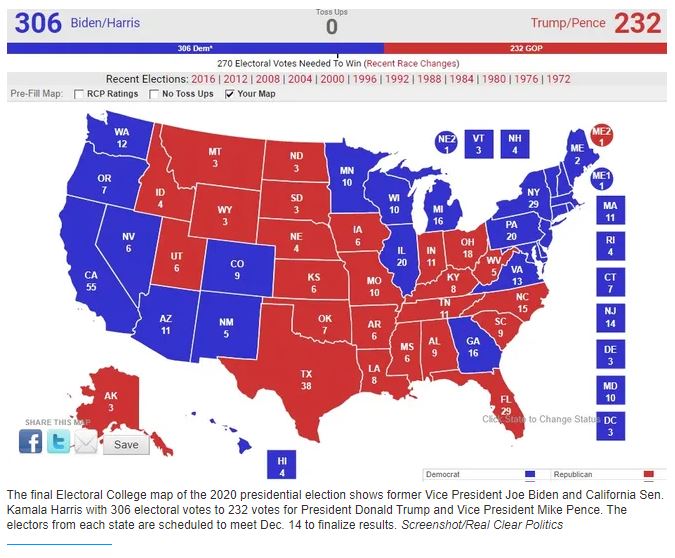
Like is or not the 2020 presidential election is not over. Electoral college votes on Jan 6, 2021. Biden 306 votes / Trump 232 votes. Votes necessary to win – 272. States with pending election challenges. Arizona – 12 votes. Georgia – 16 votes. Michigan – 15 votes. Total 43 votes.

On Feb 19, 2021, the United States Supreme Court had the opportunity to decide to hear four election lawsuits. They rejected all four ending that federal election challenges brought by Trump, Republican parties, and legislators.

On Mar 3, 2021, the United States Supreme Court heard oral arguments on an Arizona case about whether restrictions on such things as designated polling places and ID requirements were an equal protection violation.

About Mar 10, 2021, the United States Supreme Court refuses to hear Wisconsin election lawsuit on mail in ballots. The Court have no rationale for the decision.

About Mar 10, 2021, California mayor pleads guilty to election fraud and resigns as mayor pro temp.

Mar 15, 2021 – Michigan – Michigan state court judge “torched” secretary of state Jocelyn Benson for changing election rules without state legislative approval, mostly importantly changing the signature verification policy to one assuming that signatures were valid so long as there are any redeeming qualities in the application or return envelope. The news report says “of course, it’s too late now” but that it is a huge vindication for Donald Trump. Hmmm… We shall see.

Mar. 16, 2021 – Georgia – a Georgia state judge gave permission to independent election integrity plaintiff to be able to view about 150,000 Fulton County mail-in ballots to see if there are 30,000 counterfeit ballots as suspected. They believe that there will be ballots that are not folded, that are not filled in with a writing instrument, and only had presidential fill-ins. Flipping or tossing 30,000 ballots would change the presidential results and the senate results.

March 18, 2021 – Arizona – Maricopa will recount 2.1 million votes.

One person with courage makes a difference.

Waiting waiting more to come.

Silencing parents. AZ

March 19 2020

Shared from Facebook

Did Arizona Department of Child Safety try to bar parents from criticizing it?

DIANNA M. NÁÑEZ 2019.7.16

An Arizona Department of Child Safety report orders a parent to keep their court hearings and DCS meetings secret from news media, politicians and anyone who may bad-mouth the government.

In a document that otherwise seems standard for a report for a juvenile court judge, penned by a “DCS specialist” overseeing the case, this order stands out.

The DCS instructions for the parent are inserted in a section outlining services and support “to eliminate the need for continued out-of-home placement” for the child.

When a child becomes a ward of the state, the Department of Child Safety — with a judge’s approval — gets to recommend services that would aid in a family’s reunification. The parent doesn’t have to comply, but if the judge thinks the services are needed and a parent ignores the instructions, he or she could permanently lose custody of the child.

And at least one DCS report instructs clearly: The parent “must avoid inviting people to attend DCS meetings, or court hearings that may have a connection with the media, such as any journalist, newspaper/news reporters, potential political gain, or anyone who may write derogatory statements in social media or elsewhere regarding DCS or the Judicial system.”

The order is followed by allegations that the parent has repeatedly attempted “to invite these people to all” court hearings.

These hearings are public under state law.

The document criticizes the parent for continuing to need “supports” to help decrease “anxiety when faced with challenging questions or interactions with the Department.”

The Arizona Republic obtained a copy of documents that detail the state’s involvement in the case. According to the DCS document, the child was removed from home because the parent is struggling with mental health issues and unable to maintain a safe environment.

The document doesn’t say why DCS would insert language restricting a parent’s free speech rights into their case-plan services. Such services would typically include information about counseling, parenting education courses, housing or parenting skills.

The Republic has not independently verified the authenticity of the document, but it includes a court stamp with the names of state attorneys and a judge, as well as the signatures of Arizona DCS workers.

Asked by the Republic whether DCS places restrictions against parents inviting the media, politicians or anyone who may criticize the agency, a DCS spokeswoman said no, but cited the agency’s preference for privacy.

“We neither encourage or discourage parents regarding who they should or should not invite to court hearings,” said DCS spokeswoman Cynthia Weiss in a statement to The Republic. “Generally speaking our best outcomes occur when our involvement in a family’s life is kept private. Parents have a right to confidentiality in all family court proceedings.”

In response to follow-up questions about the language in documents obtained by The Republic, DCS spokesman Darren DaRonco said: “We can’t confirm the authenticity of a document that we haven’t seen.”

The Republic did not share the documents with DCS because the parent feared if their identity was revealed, they would be accused of violating confidentiality rules, which could harm their case.

The DCS ombudsman did not respond to The Republic’s emailed questions about whether language limiting who a parent can bring to court would overstep guidelines for case service plans, would violate a parent’s rights or what steps a parent could take to have such restrictions removed from a plan.

DCS officials often say confidentiality is in a child’s best interest and cite privacy restrictions as reasoning for not disclosing information about the government’s actions in a case.

While legislators and policymakers advocate for confidentiality to protect the identities of children and families, they’ve also pushed for greater transparency. In some cases, parents and officials push for accountability for the system that can take children from their families. In others, lawmakers and the public demand accountability for an agency that failed to remove children from homes where they later died.

Despite that push and pull, DCS orders that would ban a parent from informing people about their hearings or would stifle any criticism of DCS and the justice system are striking, even to those within the juvenile justice system.

“My gut reaction is that there’s a First Amendment problem there,” said Michael Nash, the once presiding judge of Los Angeles County’s juvenile courts, who now heads the region’s Office of Child Protection. “Generally speaking, our society theoretically values openness and I think that should apply in these hearings as well. Unfortunately, while confidentiality has some value, more often than not, it’s been used to protect the system rather than the parties.”

Parent and child-rights watchdog groups have increasingly raised questions about DCS’ attempts to control parents’ rights to invite anyone they want to their public hearings and speak publicly about their case. Those parents are entitled to open court hearings in cases that could determine how long their child must remain a ward of the state and, ultimately, whether the government may sever parental rights — arguably one of the most important rights any person holds.

But Director Greg McKay, who recently announced he would leave the post in September, has drawn fire as the head of an agency some see as more protective of its own actions than of parents’ and children’s rights.

DCS and the justice system largely wield the power in a child-welfare system meant to prevent neglect and abuse. But some parents say they feel they’re guilty until proven innocent and threatened that if they draw public attention to their case, it could cost them their kids.

“In too many states that’s exactly the problem, that everything is kept in the dark until a parent defies someone and risks losing their child permanently to make public information that was only written to protect bad actions by the state agency,” said Michael Ramey, executive director of the Parental Rights Foundation.

‘Getting to the truth’

Nationally, parental-rights and child-welfare advocates for greater transparency and accountability say there are still too many states with closed juvenile dependency courts, too many cases with gag orders and too little public scrutiny.

That may serve the state child-welfare agency or the government, but it harms parents who believe their or their children’s rights are being violated, Ramey said.

Sen. Heather Carter, R-Cave Creek, said she understands and is supportive of efforts to protect a family’s privacy, but lawmakers elected to represent the public should inquire about a case. It serves the agency and families, she said, when lawmakers can speak publicly about cases that present opportunities for legislative fixes or policies that would better serve child welfare.

“I think a fundamental role of government is protecting the most vulnerable so we’re constantly vigilant about that role responsibility,” she said.

Ramey pointed to a 2013 case that drew national attention when Connecticut parents fought the Massachusetts Department of Children and Families after their 15-year-old daughter, Justina Pelletier, was transferred to a Boston hospital, where her medical treatment was changed without their permission and DCF eventually gained custody of their child.

Against legal advice, the child’s father, Lou Pelletier, chose to violate a judge’s order and speak about the case. The father’s appeals were carried by news outlets across the nation. A judge later lifted the gag order and contempt of court orders against him.

The family has credited their comments to news media, in violation of the gag order, for drawing public scrutiny and spurring political pressure that changed the course of their case and eventually helped them regain custody of their daughter.

Ramey said that as a national organization, he receives numerous complaints from parents about child-welfare officials and courts trying to squelch their rights. Following the Pelletier case, more parents have balked at government restrictions and risked contempt charges to speak publicly about their case, he said.

But Ramey said he’s never seen anything as intrusive as an order that would mandate a parent keep secret their case from the news media, policymakers or anyone else who may make derogatory statements about DCS or the judicial system.

“It’s shocking and yet sadly, not surprising,” Ramey said. “Our confidentiality laws are in place to protect the children, but this kind of one-sided rule to keep parents from shining a light on the way they’re being treated does not serve children, it only serves to keep in darkness … that which needs to be fixed.”

He said such an order should spark concern in a state like Arizona, where the courts are open to the public.

“Courts that are charged with serving the best interest of the child should, of all people, be concerned with getting to the truth and not hiding it,” Ramey said. “Hiding the truth can only serve the agency that’s behaving in ways the legislators didn’t intend for it to behave, that’s behaving in ways the public would not accept, but it’s not going to protect the children.”

At DCS, a history of secrecy

Arizona’s child-welfare agency has historically been criticized for secrecy.

Long before McKay’s tenure, it took a string of child deaths and revelations of DCS’ (then known as Child Protective Services) missteps in the cases to trigger landmark legislative reforms in 2008 that permanently opened juvenile dependency hearings to public scrutiny and mandated checks on the system.

Gov. Doug Ducey appointed McKay director of DCS in 2015 after a tumultuous time, following Gov. Jan Brewer’s dismantling of the state’s Child Protective Services in 2014 amid promises to reform a broken system that had failed to protect children.

McKay had been leading the Office of Child Welfare Investigations when he exposed the agency hadn’t investigated more than 6,000 cases. Despite McKay’s whistle-blower reputation, critics balked at Ducey appointing a former police officer, who they said would prioritize enforcement, rather than a social worker or child-welfare expert, who would prioritize human services for reunifying families.

After McKay replaced Charles Flanagan, the fired former CPS head, McKay dismantled the Office of Special Investigations within the child-welfare agency, which provided some oversight of the agency through internal investigations of DCS staff.

At the time, McKay told the Phoenix New Times that OSI diverted resources needed to investigate cases of child abuse or neglect and that the closure had nothing to do with a misconduct investigation, which found no wrongdoing, into McKay’s former OCWI division. In response to a public-records request from the Republic, Ducey’s office claimed attorney-client privilege and refused to release investigation documents.

Under McKay, the number of children in foster care has declined. However, critics said their fears about a McKay administration were warranted when the new DCS head chose among his first major reformative acts to bring in-house an external public oversight system managed by Arizona State University’s School of Social Work. The move was questioned by lawmakers, child-welfare experts and DCS watchdog groups.

McKay told The Republic in a 2018 interview that he understood his critics’ concerns about his police background but that his work to reduce the number of children in foster care should speak to the priority he places on supporting families.

“People thought I was going to come in here and turn this organization into a police state — I was the person that kind of led to the dismantling of the old DCS as we knew it.” he said at the time. “I was coming from a law-enforcement and more of a prosecutorial background into a place where it is paramount that you have compassion, care and respect. Redemption is your goal.”

Chandler family’s case becomes flash-point for public scrutiny

DCS officials have increasingly refused to answer questions about numerous cases and actions, including whether or how the agency:

• properly vetted foster parents after a father was arrested for suspected abuse of his adopted foster child,

• is decreasing the number of children in foster care

• followed its own policies when a caseworker and police with guns drawn raided a Chandler couple’s home and removed their three children.

Media coverage of the Chandler case has stirred concern nationwide about public access to court hearings, as well as from parent and child-rights advocates who worry child-welfare agencies prefer to manage cases without being second-guessed and that it’s easier to remove a child from their parent when no one is watching.

In that case, the parents wanted their court proceedings to remain open, but a judge later barred a reporter and a lawmaker from a hearing, then told attendees at another hearing not to publish anything about the case. In response to legal motions by The Republic, the judge later ordered recordings of those hearings released, but ruled that the lawmaker and reporter had violated confidentiality in earlier hearings — a ruling Townsend disputed.

‘I have no confidence in DCS’: State legislator questions DCS, judicial system after privacy ruling

Parents who have concerns about how DCS is handling their case or treating their family have increasingly turned to social media to attract attention to their case. They hope their appeals for accountability will draw public support, political pressure and media coverage that may force the government to manage their case more carefully and help them get their kids back.

Some attorneys worry that the public complaints about DCS may spur retribution. Nicholas Boca, a family law attorney representing the Chandler mother, told The Republic in April that criminal charges and an edited video of the raid released by police were payback for the parents publicly criticizing police, DCS and the entire Arizona child-welfare system.

The Maricopa County Attorney’s Office told the Republic in May that despite the Chandler Police Department recommending charges against the parents, officials declined to prosecute the parents based on “no reasonable likelihood of conviction.”

The father told the Republic he’d hoped drawing attention to the case would protect his children, but he stopped granting interviews, saying he feared continuing to speak out could cost him his children.

Is legislative action needed?

Lawmakers say they regularly hear from constituents seeking help with their DCS case.

Sen. Carter said she receives desperate pleas from parents and grandparents. However, she said she’d never heard of any DCS restrictions that would ban a mother or father from informing the public, politicians, or anyone who may criticize the child-welfare system, about their DCS meetings or hearings.

“Let’s say we wanted to answer that question,” Carter said, referring to quizzing DCS about a ban in a parent’s case. “I can only have a one-way communication and say I’m concerned about this case.”

DCS officials say that they will only provide information to lawmakers about a case if they first sign a confidentiality agreement. Carter says that’s a Catch-22.

“Once I have a confidentiality agreement in place I can never report back to my constituent or fellow lawmakers what I found out,” she said.

Carter said DCS officials are typically responsive to her requests and to requests from the Legislature for policy information. But more needs to be done, she said.

“Is there some sort of statutory path that we can build to allow us to gather general information not case specific that would allow us to make policy decisions?” she said.

“It doesn’t matter whether you’re an elected official, a parent, a member of the community, we all have this fundamental moral calling to protect kids and so we want to make sure that we’re doing everything we can,” she said.

The good, the bad and the ugly

Nash, the former presiding judge of Los Angeles County’s juvenile courts who now heads the region’s Office of Child Protection, was among a group of stakeholders who pushed for greater transparency and tried to open California child-welfare hearings.

Doing so would have placed the state among 22 that mandate hearings be open to the public.

Although California state law says there’s a presumption that juvenile dependency hearings are closed, the court could allow the public into a hearing if there’s a legitimate public interest in attending. So, as presiding judge, Nash spearheaded an effort to articulate the process for someone to have access to the court under California law.

“What happens in a lot of places is the judge automatically says, ‘No, you can’t come in,’ when they really have to make that decision on a case-by-case basis,” he said.

But without regular oversight, historically veiled systems can slowly revert toward secrecy.

“It’s free speech,’ he said. “It’s your life, your case, your children, you should be able to talk about it.”

Nash said the entire child-welfare system is at stake if secrecy, and overly broad confidentiality restrictions, stymie transparency.

“The system is very imperfect, while the system is designed to do good things for any number of reasons it is never implemented as good as we like it,” Nash said. “It’s more important that the public understands the system, understands the good, the bad, the ugly, so the public and legislators can figure out what it’s going to take to fix it.”

About this report

A three-year grant from the Arizona Community Foundation makes reporting on child-welfare issues possible. See other “faces of child welfare” in our series at azcentral.com/child-welfare and support ongoing coverage.

Are you part of the child-welfare system? We want to understand your story. Share it with us at static.azcentral.com/child-safety-form/.

Reach the reporter at dianna.nanez@arizonarepublic.com

Our Youth’s View on American Prosperity

February 12, 2021 – The below post was shared through social media and it is so true.

However, before reading the opinion of this wise 26 year old, let me flash back to my twenties and tell you what I saw in America. I was eight years old with President Kennedy was elected. Honestly, I was a child in Indiana which was historically conservative so Kennedy’s presidency was not our preference. But even at the young age, I remember the impact of world events at that time. I remember warnings of communism and bombings. We had bomb raids drills in our class that we had to crawl under our small desks (like that would stop a bomb). It was well known that Cuba had missiles pointed at our country. We also were families of a new prosperity. Washing machines, black and white TVs, telephones with party-lines, and two-door cars. We still hung our clothes on the line outside. We played in the dirt in the backyard. We only had cartoons on Saturday morning. We had four channels on television. And a Sears Roebuck catalog was the closest thing we got to long-distance shopping. I miss the 1950’s. By the 1960’s, riots started in the south and on college campuses. The Kent State riot occurred the year I was slated to go away to college and being from a small town in Indiana, I struggled with trepidation about being away from home. No doubt we are in a different world and I was so excited to see the post by Alyssa……….enjoy and share.

What a great perspective and well worth the read …..This article was written by a 26 yr old college student by the name of Alyssa, who’s in grad school for her MBA. “My Generation Is Blind to the Prosperity Around Us! I’m sitting in a small coffee shop near Nokomis (Florida) trying to think of what to write about. I scroll through my newsfeed on my phone looking at the latest headlines of presidential candidates calling for policies to “fix” the so-called injustices of capitalism. I put my phone down and continue to look around. I see people talking freely, working on their MacBook’s and ordering food they get in an instant, seeing cars go by outside, and it dawned on me; we live in the most privileged time in the most prosperous Nation and we’ve become completely blind to it. Vehicles, food, technology, freedom to associate with whom we choose. These things are so ingrained in our American way of life we don’t give them a second thought. We are so well off here in the United States that our poverty line begins 31 times above the global average. Thirty One Times!!!Virtually no one in the United States is considered poor by global standards. Yet, in a time where we can order a product off Amazon with one click and have it at our doorstep the next day, we are unappreciative, unsatisfied, and ungrateful? Our unappreciation is evident as the popularity of Socialist policies among my generation continues to grow. Congresswoman Alexandria Ocasio-Cortez recently said to Newsweek talking about the millennial generation, “An entire generation which is now becoming one of the largest electorates in America came of age and never saw American prosperity.” Never saw American prosperity?? Let that sink in. When I first read that statement, I thought to myself, that was quite literally the most entitled and factually illiterate thing I’ve ever heard in my 26 years on this earth. Many young people agree with her, which is entirely misguided. My generation is being indoctrinated by a mainstream narrative to actually believe we have never seen prosperity. I know this first hand, I went to college, let’s just say I didn’t have the popular opinion, but I disagree. Why then, with all of the overwhelming evidence around us, evidence that I can even see sitting at a coffee shop, do we not view this as prosperity? We have people who are dying to get into our country! People around the world destitute and truly impoverished. Yet, we have a young generation convinced they’ve never seen prosperity and, as a result, we elect some politicians who are dead set on taking steps towards abolishing Capitalism!!Why? The answer is this, my generation has only seen prosperity. We have no contrast! We didn’t live in the great depression or live through two World Wars, the Korean War, The Vietnam War and we didn’t see the rise and fall of Socialism and Communism. We don’t know what it’s like to live without the internet, without cars, without smartphones. We don’t have a prosperity problem. We have an entitlement problem, an ungratefulness problem, and it’s spreading like a plague.”

THANK YOU ALYSSA!

An American Kidnapping

By Connie Reguli.

www.facebook.com/connie.reguli/videos/3475507782507791/

My country, AMERICA, BE VERY ASHAMED!!!!!!!

#TenneseeLastNight Oct. 6, 2020

#ImproperEndangermentDoctrineApplied

#KIDNAP

https://m.facebook.com/story.php?story_fbid=3476520862406483&id=100001458094906&sfnsn=mo&extid=eCaStKS4c8j3nscG&d=n&vh=i

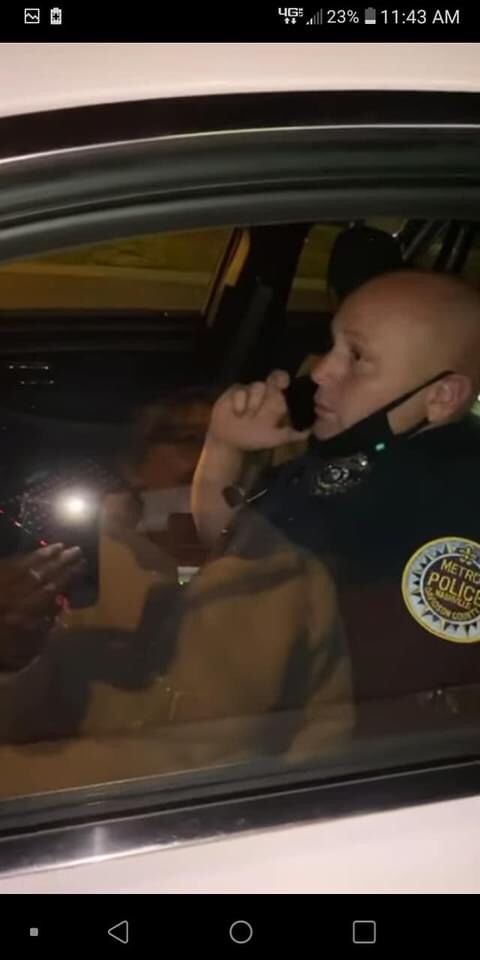
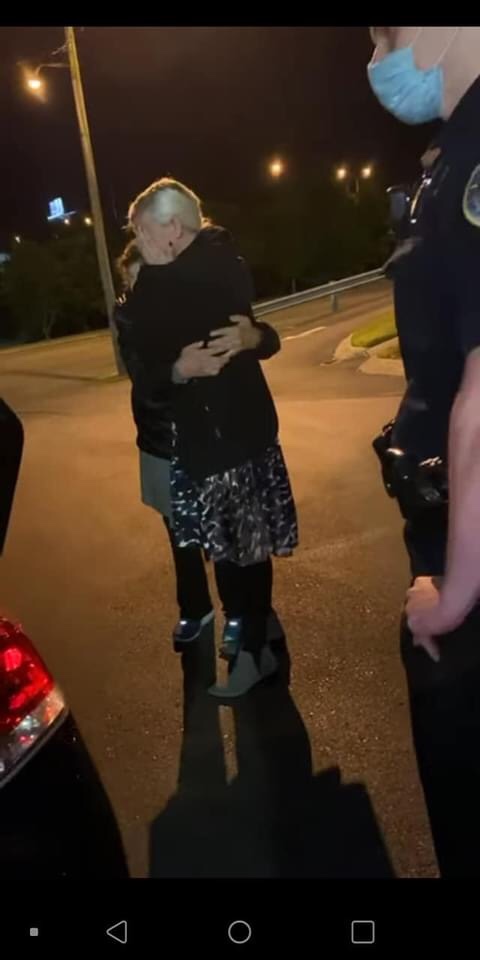
* Police detained parents for hours with no probable cause and no removal Order on hand; that detainment is Unconstitutional restraint of liberty. This happened to me in my case by city and county officers (in NC).

* Social worker shows up not knowing any details to the case. Same happened to me in NC.

*All government agents saying they are “just doing their job” or “what they were told”, which are grounds for an enabling type of doctrine in Federal civil suits. Same in my case in NC.

* They already investigated the parents for saftey factors, risk factors, exigent circumstances, and min. parent standards for this child and found nothing. They never even bothered to investigate in my case in NC or assess. No substantiation means they still have a Constitutionally-protected bubble of the right to privacy regarding this child. Obviously government agents involved in their case and mine don’t care about the Constitution. Gross negligence claims in civil suits cover the county’s excessive lack of concern in properly educating their SW (cheaper to have uneducated unlicensed ones).

*Without exigent circumstances, you cannot just take a child or something from a person to whom that child or something belongs where CRIME is committed. No crime had been commited, the police were just used as thugs with guns to steal and kidnap a child without a LAWFUL Order for removal. LAWFUL means FACTS – that paper the social worker improperly SERVED to the parents wasn’t factual. You see from the video and pics she never gave the papers to the police to serve? You have to have a PROPER investigation to discern FACTS and a social worker who isn’t taught to lie to CREATE “facts”. There were no exigent circumstances here, like there were none in my case.That would be a 4th Amendment violation. On top of due process littered everywhere in this case. Oh, I wasn’t ever properly served and they lied about who served me in court.

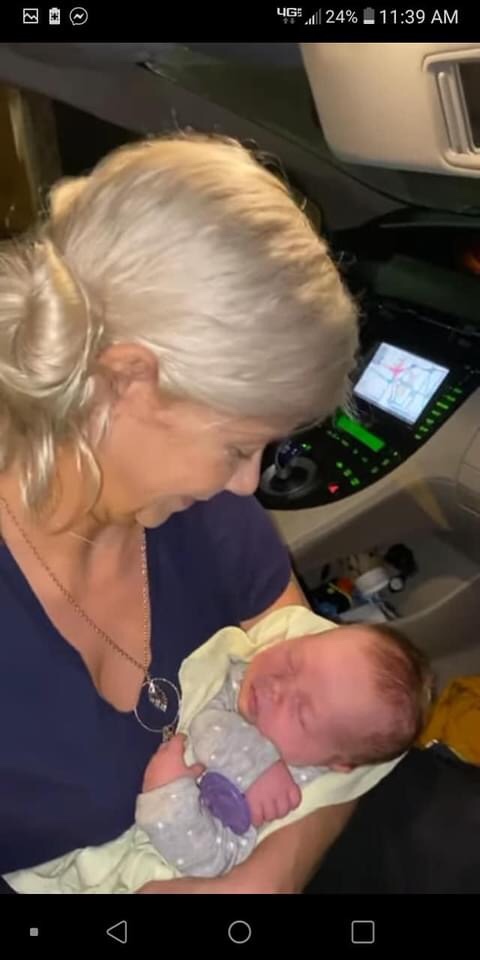
*The ‘endangerment doctrine’ means that if one child IN THE HOME experienced a certain kind of abuse, other children are looked at and assessed if THEY will be endangered by the SAME alleged abuse. If yes, the abuse applies to the other child, RISK and SAFTEY factors must apply in a PATTERN OF BEHAVIOR not single incident for a child to be removed on a “possible abuse in the future”, that parent and child has a right to privacy if the alleged abuse doesn’t apply to the other child(ren). They took this month old baby on improper endangerment doctrine, as they took my daughter on improper endangerment doctrine because my daughter was not school-aged.

Lastly, that SW didn’t know how to properly buckle in an infant in a proper car seat and refused to let the mother do so. Officers refused to help the SW who was making a once calm babe in her mother’s arms begin screaming and crying once separated from her mother.

MISSING FROM FOSTER CARE …. SEX TRAFFICKING

By Connie Reguli

In 1984, the United States Congress established the National Center for Missing & Exploited Children (NCMEC), and, as part of Missing Children’s Assistance Reauthorization Act of 2013 they receive $40 million to study and track missing and trafficked children in the United States.

In 2017, NCMEC assisted law enforcement with over 27,000 cases of missing children, the majority who were considered endangered runaways.

According to their most recent report complied from FBI data and their own, of the nearly 25,000 runaways reported to NCMEC in 2017, one in seven were likely victims of child sex trafficking. Of those, 88 percent were in the care of social services when they went missing.

Showing the scope of the abuse, in 2017 alone, NCMEC’s CyberTipline, a national mechanism for the public and electronic service providers to report instances of suspected child sexual exploitation, received over 10 million reports. According to NCMEC, most of these tips were related to the following:

  • Apparent child sexual abuse images.
  • Online enticement, including “sextortion.”
  • Child sex trafficking.
  • Child sexual molestation.

Other governmental organizations have corroborated this horrifying trend. In a 2013 FBI 70-city nationwide raid, 60 percent of the victims came from foster care or group homes. In 2014, New York authorities estimated that 85 percent of sex trafficking victims were previously in the child welfare system. In 2012, Connecticut police rescued 88 children from sex trafficking; 86 were from the child welfare system. 

Equally as disturbing as the fact that most sex trafficked kids come from within the system is the fact that the FBI discovered in a 2014 nationwide raid that many foster children rescued from sex traffickers, including children as young as 11, were never reported missing by child welfare authorities.

Last year, TFTP reported on an example of this lack of reporting out of Topeka, Kansas. In the shocking report, the Kansas Department for Children and Families (DCF), which oversees foster care in the state, were found to have lost 70 children after a high profile case of three missing sisters garnered the attention of authorities.

This has to stop.

Published by Free Thought Project JUNE 12, 2018

OVERVIEW OF CIVIL RIGHTS ACTIONS

August 31, 2020

BY Senior Scholar, Dean Institute for Corporate Governance and Integrity, Lipscomb University

A Legal Overview Of Section 1983 Civil Rights Litigation

04/14/2017 11:12 am ET Updated Apr 14, 2017

A Legal Overview of Section 1983 Civil Rights Litigation

If a governmental police department, in contrast to a private security company, was involved in the recently widely reported removal of a passenger from an airplane, there is a possibility, depending upon the specific facts, of a successful Section 1983 lawsuit that would impose liability upon that governmental entity. Police action may extend liability for injuries such as assault and battery to government in addition to private individuals and businesses.

The federal Civil Rights Act of 1871 (yes, 1871), also known as the Ku Klux Klan Act, was part of post Civil War legal developments that include the Thirteenth, Fourteenth, and Fifteenth Amendments. This comment briefly provides an incomplete educational overview of litigation under this significant legislation. Always consult an experienced attorney in all civil rights cases.

42 U.S.C. Section 1983:

“Every person who, under color of any statute, ordinance, regulation, custom, or usage, of any State or Territory or the District of Columbia, subjects, or causes to be subjected, any citizen of the United States or other person within the jurisdiction thereof to the deprivation of any rights, privileges, or immunities secured by the Constitution and laws, shall be liable to the party injured in an action at law, suit in equity, or other proper proceeding for redress, except that in any action brought against a judicial officer for an act or omission taken in such officer’s judicial capacity, injunctive relief shall not be granted unless a declaratory decree was violated or declaratory relief was unavailable. For the purposes of this section, any Act of Congress applicable exclusively to the District of Columbia shall be considered to be a statute of the District of Columbia.”

Dormant Until the 1960s

Very little Section 1983 litigation occurred until the U.S. Supreme Court’s 1961 decision in Monroe v. Pape. This case involved a warrantless breaking into a home by 13 Chicago police officers. While the city of Chicago could not be sued (municipal liability was added in 1978) the police officers could be sued as acting “under the color of state law” even though they were not authorized and may have been forbidden to act. This decision allowed individual governmental employees to be sued for acts that violate the Constitution or statutes.

Meaning of “Person”

The judicial interpretation of “person” under Section 1983 is complex and requires that one seek experienced legal counsel. The following provides only an extremely brief and incomplete overview.

The Supreme Court has decided that a state and state agencies are not “persons” subject to suit under Section 1983. However, municipalities and other local governmental units such as school districts may be sued when official policies are in clear violation of constitutional rights according to the Supreme Court’s 1978 decision in Monell v. Department of Social Services.

One cannot sue a state officer under Section 1983 for the typical actions routinely undertaken in an official capacity. For example, denying a driver’s license due to a failing grade on a driving test does not create a Section 1983 case. However, merely being an official does not provide blanket immunity for the violation of an individual’s rights.

A 1971 Supreme Court decision, Bivens v. Six Unknown Named Agents, stated that lawsuits could be brought for violations of Fourth Amendment rights even in the absence of a statute that authorizes litigation holding, in essence, for every wrong there is a remedy. The Bivens decision has been interpreted broadly to allow lawsuits for a variety of violations, such as “excessive force,” unless a specific statute clearly provides an alternative remedy or some special factors mitigate against allowing the particular lawsuit.

Purely private persons or businesses not acting under “color of state law” are immune from a Section 1983 lawsuit [Morris v. Dillard’s Department Stores, Fifth Circuit, 2001]. Other state tort (personal injury) legal remedies may exist.

Acting Under “Color of State Law”

The Supreme Court has traditionally indicated that “color of state law” means power “possessed by virtue of state law and made possible only because the wrongdoer is clothed with the authority of state law” [West v. Atkins, 1988]. This means that a state employee performing a governmental function, even if exceeding her/his authority, is acting under color of law. Additionally, a non-governmental person or entity may also act under color of law.

Rights “Secured by the Constitution and Laws”

Section 1983 does not create new legal rights. Rather, it is focused on the violation of existing rights. A given situation may involve state laws and state remedies such as tort (personal injury) law. However, most of the Bill of Rights have been held to apply to state and local entities and officials. Violations of rights such as due process, the Fourth Amendment (searches) and Fifth Amendment (self-incrimination) are common examples.

Immunity Issues

Historically public officials are granted either absolute or qualified immunity from lawsuit (can’t be sued) when performing official duties. Examples of absolute immunity involve a limited group of officials such as the President, legislators, or judges carrying out official duties. Qualified immunity is the general rule for individuals such as police officers and other officials unless they violate clearly established Constitutional rights or act in a grossly unreasonable fashion. The Supreme Court has held that Section 1983 does allow immunity defenses with some caveats. Actions taken with “deliberate indifference” may impose liability [Farmer v. Brennan, 1994]. This is a very high standard beyond negligence (recklessness) and involves conscious disregard.

Bottom of Form

There are numerous Section 1983 First Amendment cases in which harassment and inconvenience, alone, do not produce official liability. Would a “person of ordinary firmness” be deterred from speaking or acting by the official’s conduct? [Friedmann v. Corrections Corporation of America, Ninth Circuit, 2001].

Fourth Amendment cases involving police stops and investigations find no violation of Section 1983 if there were “reasonable suspicion” for the initial stop, and the detention was only long enough to carry out the purposes of the stop. Probable cause exists for an arrest if there is a reasonable belief that criminal activity has occurred, even if a subsequent trial results in a not guilty verdict. As the Supreme Court has stated: “The Constitution does not guarantee that only the guilty will be arrested. If it did, Section 1983 would provide a cause of action for every defendant acquitted — indeed, for every suspect released.” [Baker v. McCollan, 1979].

Off-Duty Incidents

Often off-duty Section 1983 lawsuits involve police officers. Traditional employer liability for an employee’s actions (respondeat superior) will not impose Section 1983 liability on a municipality. Rather, the city must have either an express policy or a well-established custom or common practice that produces a violation of constitutional rights.

Consistently enforced personnel and municipal policies will prevent a claim. For example, a 2016 Fifth Circuit decision involving an off-duty intoxicated Houston police officer who killed an individual involved in a bar fight did not impose liability on the city of Houston since Houston rules prohibited police officers from carrying a firearm while intoxicated [Rodriguez v. City of Houston]. A similar no-municipal-liability decision, with a different factual background, was reached in 2015 by the Seventh Circuit [Rossi v. City of Chicago].

However, off-duty police officers employed as security guards who routinely exercise arrest and booking functions in coordination with business owners and the local police department may impose Section 1983 liability on the municipality [Lusby v. City of Lawton, Tenth Circuit, 1984]. Has the officer acted under an assertion of official status and are the actions in some way connected to this official status, even if exceeding his/her authority? Does a particular local custom rise to level of color of law?

Procedural Considerations

While Section 1983 contains no statute of limitations (time in which a suit must be brought), federal courts tend to apply the personal injury statute of limitations of the state where the action occurred. Also, a plaintiff must possess “standing to sue,” that is a specific concrete actual or imminent injury to himself/herself. One cannot typically seek redress for others. Additionally, the claim must be “ripe.” Is the case one that a court may appropriately decide now rather than await the unfolding of future events? Is the case only hypothetical?

Generally speaking, a successful Section 1983 plaintiff may collect typical state tort compensatory damages such as those for medical expenses, lost income, pain and suffering, emotional distress, reputational injury, etc. Punitive damages are available against individuals (but not municipalities) in cases involving “reckless or callous disregard for the plaintiff’s rights, as well as intentional violations of federal law” [Smith v. Wade, 1983]. Finally, reasonable attorney’s fees and expert witness fees are also available [42 U.S.C. Section 1988]. As a matter of practice, municipalities frequently indemnify their officials and police officers if a financial judgment is rendered against them individually.

A Brief Section 1983 Litigation Checklist

1. Has there been a violation of a Constitutional or statutorily protected right?

2. Is the actor a person that is subject to Section 1983?

3. Did this person act under color of law or local governmental custom or practice?

4. Are the actions complained of connected to the deprivation of rights in a reasonably foreseeable manner (proximate causation)?

5. Are there defenses to liability such as immunity, lack of standing to sue, or a lack of ripeness?

6. Is a monetary judgment collectable from a governmental entity or, in the case of an individual defendant, personal assets or personal insurance policies?

This comment provides a brief and incomplete educational overview of a complex topic and is not intended to provide legal advice. Always consult an experienced attorney in specific situations.

A Time for Nehemiah.

By Connie Reguli. Aug 23 2020

I am moved this Sunday morning to share with you segments of Pastor Johnson’s sermon on the tactics of the devil and the awesome power of Nehemiah.

Read Nehemiah 4 and you will learn of a powerful leader blessed and chosen to strengthen his people in desperate times.

First, you must understand fear. Fear interferes with the building of God’s kingdom. The Bible repeatedly says “fear not” and “fear the Lord” and “fear God”. For if you fail to follow your calling you will NOT receive the blessing. You will live in a state of confusion. Then the warriors in Christ must be gathered wherever they are to take up their shields and do whatever they can do to work on the wall which will shield and protect not just one person but a nation.

Second, you must keep your mind on Christ and know your identity and profess it. To feel the weight of the world of deception and do nothing is a waste of space. You have been promised by the blood of Christ that if two or three of you agree and bring it before God it shall be granted.

Third you must always standard prepared to face the enemy and pray that our leaders are guided by the Holy Spirit to bring redemptive solutions. Much evil is soon to be exposed and it will either drain your spirit or empower you to pick up your shield 🛡 and sword ⚔️ to restore this land. This Nation was created out of an idea 💡 of liberty and freedom. We can only keep our liberty if we are diligent.

Our money says In God We Trust. Our pledge says “one nation under God”. Our first president implored us to seek the will of God and then do it mightily.

In Nehemiah the enemy was disheartened when they realized that building the wall could only have been done with the strength of God Almighty. Now is the time for Nehemiah-leadership in this nation.

Read Nehemiah.

ASFA Termination of Parental Rights could be suspended during COVID19

By Connie Reguli

So this information just came in on the ABA parent representation listserve.

    Dear Parent Advocates:

    I’m very excited to report to you that Rep. Gwen Moore, a  life-long champion of family-centered child welfare reforms, has just introduced H.R. 7976 in Congress.  This bill’s central focus is on suspending the ASFA    timeline requiring states to petition for termination of parental rights if a child has been in care for 15 of the most recent 22 months.

    Rep. Moore has issued the attached statement in support of the bill.  Here  is the entry on Congress.Gov:

https://www.congress.gov/bill/116th-congress/house-bill/7976/tex

    <https://www.congress.gov/bill/116th-congress/house-bill/7976/text>t.

The text of the bill is attached to this email but we expect the actual bill     text with the bill number to be available at this link soon.   The release that Rep. Moore’s office just issued is attached below this email.

    The following is directed to this listserve specifically. The bill would, if passed, make it clear that states do not have to file petitions for termination of parental rights during times of public health crisis.  It does so in two ways: (1) by directly suspending the requirement of filing a petition for termination of parental rights during any public health crisis that has been declared federally or in the state, and (2) expanding the list of “compelling reasons” not to petition for termination to include times of “public health crisis.” The bill also proposes a one-year time frame after public health emergencies are no longer in effect so that parents can resume services and in effect have some opportunity to make up for the terrible effects of the health crisis that set them back.    The bill also clarifies that reasonable efforts must continue and defines reasonable efforts more specifically by a variety of alternative methods for providing services during times of public health crisis.

    This bill is the result of very hard work by a number of members of this     listserve and others who have joined together to make draft proposals and    seek out Congressional support. Members of the strategic planning group for this effort include a number of National Alliance for Parent Representation Steering Committee members. The bill has strong bipartisan allies including leadership by A Texas Public Policy Foundation and ParentalRights.org  and the Shriver Center who have worked together to bring this issue to the attention of lawmakers.  The states that our working group members represent include the following (in the order of the names listed above), Illinois, New York, New Jersey, California. Pennsylvania, Oregon, Texas, and Virginia.

  Currently, our group is looking for more allies in every state who can help connect us to other groups that may support this bill and identify parents who have compelling stories of why they would need more than 15 months to reunite with their families, especially during times of public help crisis.

     We especially are looking for people who help in states where we don’t yet have active representation in our group. We have had a few folks volunteer to be in our new state network from additional states, but if you are from a state that isn’t listed here and have any political connections or    connections to groups that you think would be in support of the bill, please contact me and I will let you know of next steps for this network of advocates.

    We also view this bill as providing a means of educating members of     Congress as to the real-life harm to children and families of too-speedy    termination especially in times o COVID. This will help Congressmembers    gain a better picture than the media often presents about what the    timelines actually mean.  The bill is consistent with the guidance we have    seen from the Children’s Bureau but it goes further by actually providing    in law the clarity that termination of parental rights is not required states will not forfeit federal dollars if they do not petition for TPR.

    Thank you  Diane Redleaf Co-chair, United Family Advocates Principal, Family Defense Consulting

    Member, Steering Committee, National Alliance for Parent Representation Congresswoman Gwen Moore Introduces the Suspend the Timeline Not Parental Rights During a Public Health Crisis Act*

    Today, Congresswoman Moore introduced H.R. 7976, legislation to pause the federal timeframe for states to file a petition to terminate parental    rights for a child and guarantee that states do not receive federal funding    cuts due to this change in policy. In response, she released the following    statement:

    “COVID-19 has created great uncertainty for many, causing millions to face housing, health, food, and job insecurity. It has also hindered parents    from being able to utilize the services now unavailable in the COVID    closedown that would normally help them reunify with their children. This unprecedented crisis should not lead to permanent damage to families    because of a federal timeline created before this pandemic.”

    This bill already has bipartisan backing from numerous advocacy groups across the aisle, who note the importance of preserving children’s family   ties:

    “Parents who were diligently working services required to provide a safe,  stable home for their children suddenly, and through no fault of their own, found themselves unable to access these services due to COVID-19    pandemic-related lockdowns,” said *Andrew C. Brown, Distinguished Senior  Fellow of Child and Family Policy with the Texas Public Policy Foundation*.

    “But the clock continues to run on arbitrary case timelines governing    termination of parental rights, robbing them of precious time. A temporary  suspension of termination timelines gives these parents a fair opportunity    to restore their families and honors their decision to take personal    responsibility by doing the hard work necessary to achieve reunification.”

    “Children in foster care have a heightened need and clear right to visit    their parents. At the start of the pandemic, many child welfare agencies    suspended in-person family time for children and their parents and    siblings. Before the pandemic, many of these children would have been returned to their  families, but agencies have been unable to provide the services needed to facilitate reunification. We should not allow this pandemic to lead to   unnecessary permanent termination of parent-child relationships,” *Jey Rajaraman, Chief Counsel, Family Representation Project, Legal Services of New Jersey*.

    “We should not allow the unprecedented challenges of this public health  situation to take away a family’s chance to reunite. Children deserve the    right to be with their families whenever safely possible,” *Chris Gottlieb,    Co-Director, NYU School of Law, Family Defense Clinic*.

    *Rep. Gwen Moore has long been a leader on child welfare reform.  She looks forward to working with her colleagues from both parties to ensure these families are given the opportunity they deserve to safely reunify. COVID has led to an immense amount of uncertainty in the lives of families  struggling with poverty.  This bill prevents a temporary, though severe,    health crisis from causing irrevocable separation of children from their    parents and a permanent loss of their vital family times who have lost the    opportunities every family deserves.*

    Read more information about the legislation *here    <https://gwenmoore.house.gov/uploadedfiles/background_information_on_the_suspend_the_timeline_not_parental_rights_during_a_public_health_crisis_act_.pdf>.*

Religious freedom and adoption

July 26 2020 By Connie Reguli

On July 21, 2020 the Second Circuit court ruled on a case out of New York which attempted to shut down a faith based adoption agency (New Hope Family Services) because they refused to consider same-sex couples. This is a win for faith based adoption agencies.

Last year in Pennsylvania, the state agency refused to send referrals for adoption to Catholic Charities because CC refused to consider same-sex couples. The United States Supreme Court has agreed to hear this appeal out of Third Circuit and will likely do so this fall.

NEW YORK & SECOND CIRCUIT

In Second Circuit several civil rights organizations opposed the New Hope adoption agency by filing amici briefs such as the Americans United for Separation of Church and State.

.

Amicus Brief Cover

On reviews of the arguments, this organization claims that the regulation is First Amendment neutral and does not affect the autonomy of the church. However it claims that to allow the church relief is detrimental to the health and welfare of the LBGTQ population.

Issues summary Amicus Brief. T t

This issue is headed to the United States Supreme Court because of a Third Circuit decision out of a court in Pennsylvania.

PENNSYLVANIA AND THIRD CIRCUIT

BPNEWS reported – The U.S. Supreme Court is expected to weigh in on the intersection of religious liberty and same-sex marriage in foster care and adoption during its next term, which begins in October. The justices agreed in February to review a Third Circuit Court of Appeals ruling that the city of Philadelphia did not violate religious freedom by halting referrals to Catholic Social Services because the agency does not place children in the homes of same-sex couples.

The Third Circuit opinion is captioned Fulton Et al v City of Philadelphia Et al. Case No. 18-2574, but is well known as the Catholic Charities case. The court said this:

Excerpt of Third Circuit Opinion

In layman’s terms, Catholic Charities lost. The state was allowed to refuse placements and referrals to CC due to their exclusion policy.

Over 200 (I stopped counting) persons and organizations of interest filed briefs and participated in the appeal. Several states including Texas, Illinois, Delaware, California, Oregon, Vermont, New Jersey, New York, Massachusetts Washington, and Rhode Island, also participated.

FEDERAL SOLUTION?

The Ethics & Religious Liberty Commission (ERLC) proposed a federal solution to the problem for faith-based agencies which is a priority in its legislative agenda. It has worked for adoption of the Child Welfare Provider Inclusion Act, which would bar government discrimination against adoption agencies and other child welfare entities that refuse to take part in serving in a way that contradicts their beliefs.

TENNESSEE LEGISLATES RELIGIOUS FREEDOM.

In NASHVILLE (BP) — Tennessee state senators approved legislation Jan. 14 that would prohibit the state from forcing Christian or other faith-based adoption agencies to place children in homes that would “violate the agency’s written religious or moral convictions or policies.”Senate Bill 1304 passed the Senate by a margin of 20-6. Sen. Steve Dickerson of Nashville was the only Republican voting against the bill, joining the chamber’s five Democrats, according to an article in The Tennessean.

The bill will now go to Gov. Bill Lee for his signature, having passed the house last year by a 67-32 margin.

The bill was opposed by gay rights activist groups and those who felt the bill would have a negative impact on the state’s economy.

Dickerson, in speaking against the legislation, said passage of the bill could cause the state to suffer an adverse financial impact because of “bad public policy,” The Tennessean reported.

According to The Tennessean, eight states across the country have passed similar legislation. The paper also reported it had contacted the governor’s office and received confirmation the governor “would be signing the bill as soon as it reaches his desk.”

WHERE WILL THIS GO?

This ruling by the United States Supreme Court will be precedental. In 2015 the Supreme Court ruled on Oberfell v Hodges which found that the states could not prohibit same-sex marriage. It found that the right to marry was a fundamental liberty and the states could not prohibit marriage based on the gender of the couple.

The adoption issue raises another fundamental liberty issue and it is likely that that the LBGTQ community will claim that the right to parent is a fundamental liberty. However there is no fundamental liberty to adopt.

What is disturbing to me is that the rights of children are not represented here. We already have children removed from heterosexual families and placed in LBGTQ homes for foster to adopt. Do the children have a fundamental liberty to not be placed in this unit? What is the next extension? Will the state welfare agencies accept transgenders as fosters?

We are on a slippery slope. Our national laws regarding relations, family, and marriage are complicated and distorted. A century ago sexual deviation was criminal. It was even illegal to live with or marry your paramour if you cheated during your marriage with that person. Now it is common. As a divorce attorney I saw it all the time.

We have much to do as a nation in this area. Pray for wisdom and pray for our country.

KY District Court makes a giant leap for parents’ rights.

By Connie Reguli July 12, 2020

In the Eastern District of Kentucky, the Court has denied summary judgment on substantive and procedural due process claims where the social worker threatened a Mother to put her child under an “immediate protection agreement” regarding her three year old daughter when her child had a bite mark on her back. The child reported to her grandmother that a child in her daycare had bitten her. The grandmother reported it to the daycare and the daycare called in a referral claiming that the bite mark did not appear to have come from a child. Holliday v. Leigh, et al, 2:17-cv-113, E.D.KY June 15, 2020.

Nicki Holliday 2020

CHFS social worker Alecia Leigh went to the day care and attempt to interview the child. When the child’s mother, Maureen Holliday came to pick up her daughter, Leigh refused to let Mother have the child and insisted on a separate interview of the Mother. Mother asked to have someone present and Leigh refused. Leigh then told the Mother that she was under a Prevention Plan and Mother was limited to supervised contact only with the child.

The investigation lagged. However, the interviews that were conducted exonerated the Mother. In spite of compelling evidence that the child was not in harm’s way in Mother’s care, the plan remained in place. From October 2016 to January 2017, Mother remained under the plan and had limited contact with her daughter. Finally, the case was dismissed.

The Court denied summary judgment on substantive and procedural due process finding that the prevention plan violated Mother’s parenting rights and that it was secured under duress. Mother was not advised of her rights and was never provided a hearing on the prevention plan. The Court also denied summary judgment on the procedural due process right of Mother which requires notice and the opportunity to be heard. The Court denied the defense of qualified immunity, in part, in reliance on Schulkers v. Kammer, 367 F. Supp. 3d 626 (E.D.Ky 2019)

The Court also found that Leigh’s supervisor was liable because the plaintiff need only show that a supervisory official implicitly authorized, approved, or knowingly acquiesced in the unconstitutional conduct of the offending subordinate. Coley v. Lucas Cty., 799 F. 3d 530, 543 (6th Cir. 2015).

The Court also refused to dismiss the state claim of intentional infliction of emotional distress.

However, the District Court did grant summary judgment on the prayer for punitive damages in a civil rights case. The court stated that the Plaintiff must show that the Defendant was motivated by evil motive or intent, or when it involves reckless or callous indifference to the federally protected rights of others. Citing Smith v. Wade, 461 U.S. 30, 56 (1983).

The court stated that Sec. 1983 presupposes that damages that compensate for actual harm ordinarily suffice to deter constitutional violations, therefore punitive damages are only permitted in particularly egregious situations. The conduct must be so egregious that it cannot be remedied by compensatory damages.

The Holliday decision is good for families and shows a small step towards constitutional fairness for families while dealing with the state-run child welfare agencies.

Your Voice Matters

By Connie Reguli June 28 2020

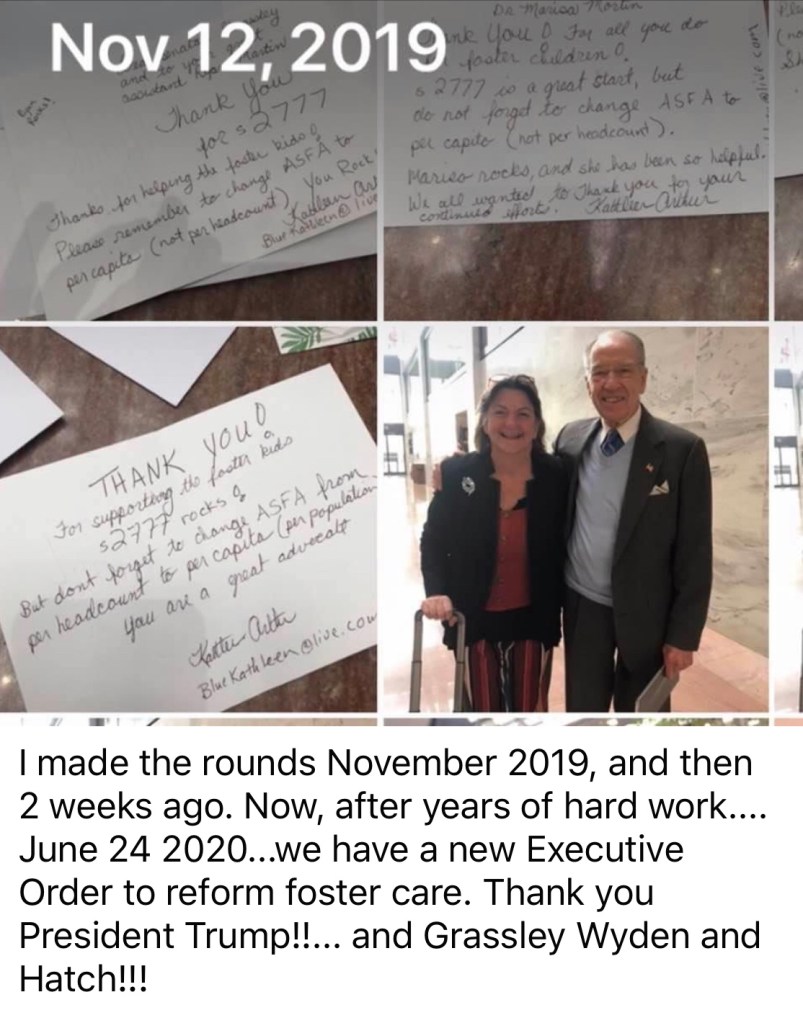
Don’t y’all ever say your voice does not matter. I have worked with an amazing group of citizen lobbyists since 2016 who have sacrificed their time and money to traipse to DC and their state capitols for reform of the child welfare / family court dysfunction in this country.

We started in 2016 and every year we would go to DC sometimes two three and four times just to hold signs on the street or walk the halls of the legislative offices. We would tell legislative aids and service employees and policy makers and congressmen and senators about the destruction of families and the perversion of federal funding. We carried personal stories and courtroom horrors. We left flyers and I even made a three hundred page book of stories told by families across this country.

Thousands of families separated from their children in the United States 🇺🇸 are speaking out.
Families destroyed by perverted funding under Title IVE and Title IVD March in DC.

In Feb 2018 the Family First Preservation and Services Act passed but was not implemented. So we kept at it. In December 2018, ACF Jerry Milner issued a letter to enhance funding for parent representation. In 2019 we supported and followed the Family First Support Act and it was signed by Pres Trump In December 2019.

In June 2020 President Trump signed an executive order demanding that HIS federal agency HHS get the best practices guidelines completed to accomplished the goals of The Family First Act and more. He demanded that states report to the agency data that will allow new metrics in the federal funding requirements. He supports family preservation, kinship care, and more support services for families. The entire order is covered in a previous blog.

The states must do their part. I prepared a state level Family First Act for Tennessee but no legislator would carry it because it was too overwhelming for them to process and made such dramatic changes to the child welfare system that they knew the governor’s state agencies would push back. The bureaucratic slugs 🐌 would not want to change their practices.

June 26 2020 Family Forward Project facebook and YouTube Connie Reguli

Now, more than ever, your citizen voice matters. Contact your legislators in DC and let them know that this is not enough. We need to ban Adoption and Safe Families Act bonus dollars that the states receive for stranger adoptions which favor rehoming children over maintaining connections to their family of origin.

Contact your Congressman and Senator and play this message.

Join us at Family Forward Project Facebook.