By Connie Reguli
In many child welfare and child custody cases, the Parents want to reach out on social media. Sometimes for comfort and encouragement; sometimes to rant about the injustice; and sometimes to point out irregularities in the judicial process and express a legitimate concern.
Too often parents are “gagged” by the Courts who cite many reasons, most of which are nonsense. In my experience, most of the means to silence a parent are intended to prohibit them from making valid complaints about the process.
I have been an attorney for 25 years. The judicial process is flawed and the players are human. The fact that a judge gets mad at a parent or an attorney is unprepared happens. However, to the litigant/parent these things interfere with THEIR CASE. They have a right to be frustrated.
Judicial GAG orders are mostly unconstitutional.
Here is why:
THE PROHIBITION AGAINST PRIOR RESTRAINTS
The United States Supreme Court
established a broad prohibition against prior restraints of speech in Neb. Press Ass’n v. Stuart, 427 U.S. 539
(1976). The First Amendment thus accords
greater protection against prior restraints than it does against subsequent
punishment for a particular speech. A
system or prior restraint is in many ways more inhibiting than a system of
subsequent punishment. It is likened to
being under government scrutiny a far wider range of expression; it shuts off
communication before it takes place; suppression by a stroke of the pen is more
likely to be applied than suppression through a criminal process; the
procedures do not require attention to the safeguards of the criminal process;
the system allows less opportunity for public appraisal and criticism; the
dynamics of the system drive toward excesses, as the history of all censorship
shows. It has been generally, if not
universally, considered that it is the chief purpose of the First Amendment’s
guaranty to prevent prior restraints upon publication.
The Nebraska Press case dealt with the Court’s attempts to suppress publication of events that happened in the courtroom and attempted to expand that limited exception to this prohibition. The Supreme Court rejected this attempt to shut down reports of judicial proceedings, determining that the Courtroom was already in the public domain.
In 2002, the Middle District Court
of Tennessee considered the government’s role in prior restraint on speech in
the context of controlling a non-profit’s ability to raise charitable
donations. A prior restraint exists when
the exercise of a First Amendment right depends on the prior approval of public
officials. The term prior restraint
describes administrative and judicial orders that block expressive activity
before it can occur. Under a system of
prior restraint, the lawfulness of speech turns on the advance approval of
government officials. Although prior
restraints are not unconstitutional per se, they come to court bearing a heavy
presumption against their validity. Feed the Children, Inc. v. Metro. Gov’t of
Nashville, 330 F. Supp. 2d 935,
(M.D. Tenn. Mar. 21, 2002) SEE
ATTACHED.
The Tennessee Court of Appeals recognized the federal guidelines on prior restraint of speech in In re Conservatorship of Turner, M2013-01665-COA-R3-CV, (Tenn. Ct. App. May 9, 2014). It acknowledged that an impermissible prior restraint exists when the exercise of First Amendment rights depends upon prior approval of public officials. A system of prior restraints bears a heavy presumption against its constitutional validity. The Court did recognize the exception stated by the Sixth Circuit in which a person could be prohibited from repeating the same libelous and defamatory statements which have been judicially determined in proceedings to be false and libelous.
THANK YOU FOR PROVIDING A REVIEW.
THE PROHIBITION AGAINST CRIMINAL SEDITION
In 1984, the United States Supreme
Court entered an opinion in Garrison v.
La., 379 U.S. 64, (1964) in which discussed a dispute between the district
attorney and a judge. The attorney held
a press conference where he issued a statement disparaging judicial
conduct. The district attorney was
arrested under the criminal sedition laws of New York. The court stated that where the criticism is
of public officials and their conduct of public business, the interest in
private reputation is overborne by the larger public interest secured by the
constitution, in the dissemination of truth.
Even where the utterance is false, the great principles of the Unites
States Constitution which secure freedom of expression in this area preclude
attaching adverse consequences to any except the knowing or reckless falsehood.
Debate on public issues will not be uninhibited if the speaker must run the
risk that it will be proved in court that he spoke out of hatred; even if he
did speak out of hatred, utterances honestly believed contribute to the free
interchange of ideas and the ascertainment of truth. Since an erroneous statement is inevitable in
free debate, it must be protected if the freedoms of expression are to have the
breathing space that they need to survive, only those false statements made
with the high degree of awareness of their probable falsity may be the subject
of either civil or criminal sanctions.
For speech concerning public affairs is more than self-expression, it is
the essence of self-government. The
First and Fourteenth Amendments embody a profound national commitment to the
principle that debate on public issues should be uninhibited, robust, and
wide-open, and that it may well include vehement, caustic, and sometimes
unpleasantly sharp attacks on government and public officials.





























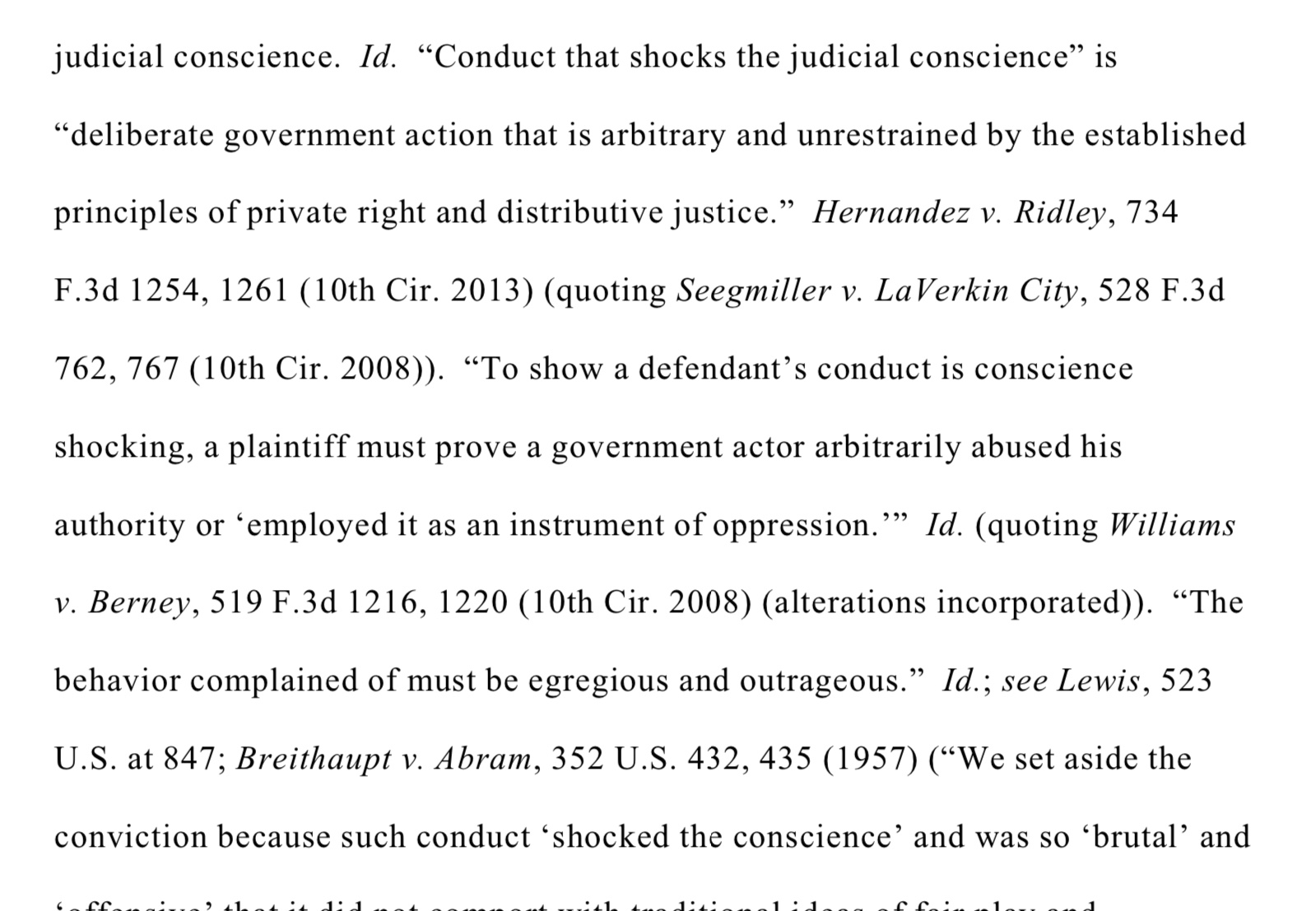
 In this case a minor child sued for wrongful removal and violation of substantive due Process rights.


 Radical Tennessee - Radically Accountable and Radically Free