Tennessee Foster Fail AGAIN

Kids in state custody forced to sleep on floors in state office building

BY: ANITA WADHWANI – AUGUST 2, 2021 5:01 AM

 In grainy still photos cropped from video obtained by the Tennessee Lookout, children in state custody sleep on the floor of a state office building. One teen sleeps on the bare floor while another lies on an air mattress with no blanket. The children were in the custody of the Department of Children’s Services

A teenage girl in a pink hoodie and jeans slept restlessly in a downtown Nashville office, with no pillow, sheet, blanket, mattress or pad separating her from the carpeted floor.

Another teen slept directly on the floor, too, huddled under a single blanket. A few feet away, two elementary-school-age kids slept head to toe on a single twin mattress. Three other teens were also asleep in the room, where piles of kids’ clothing, a crib, and toys lined the walls along with trash and at least one bunched up dirty diaper.

A total of seven kids in the custody of the Tennessee Department of Children’s Services were forced to spend the night in office space at the Davy Crockett Tower in downtown Nashville on July 16 — a Friday night — in an instance captured on video and obtained by the Tennessee Lookout.

Children are typically taken into custody to ensure their safety and well-being after DCS investigates allegations of abuse or neglect. Kids come into custody experiencing trauma from abuse, trauma from being taken from familiar surroundings and often a sense of powerlessness and fear over their future.

Taking kids to sleep with strangers in an office without providing essential comforts represents a failure by the state agency to live up to its most basic duties, according to a longtime DCS caseworker, who requested anonymity out of fear drawing attention to the department’s treatment of children result in firing.

“Being unable to find a placement was an ongoing problem before the pandemic,” the caseworker said. “It’s gotten much worse. The number of kids sleeping in offices has never been this bad.”

Click play and then fullscreen to view larger video.

The caseworker said that DCS has failed to provide enough back-up for kids taken into custody — foster parents, or temporary and more appropriate spaces, — as the pandemic impacted the ongoing willingness of foster parents to take in children. When kids have to stay in offices, caseworkers have to stay with them, too, finding their own child care arrangements and adding to the burden of an already stressful job, the caseworker said.

Jennifer Donnals, a spokeswoman for the department, said Friday that it was “not a violation of policy for children to stay in DCS offices during the nighttime hours until an appropriate placement is found.”  In these instances, “dedicated staff provide a safe environment until an appropriate placement is found,” she said.

“The reality is that children frequently come in to care late in the evening, and it can take several hours to find them appropriate placements in foster homes or treatment facilities, especially when working with sibling groups or teenagers. . . We have accommodations in our offices to help provide comfort to children in these temporary situations, including blankets, cots and air mattresses, food, toys and other supplies.”

 Jennifer Donnals, a spokeswoman for the Tennessee Department of Children’s Services, said it is “not a violation of policy for children to stay in DCS offices during the nighttime hours until an appropriate placement is found,” but did not address how frequently kids taken into custody are sleeping in state offices.

In her response, Donnals did not address other questions, including how frequently kids taken into custody are sleeping in state offices.

A space for children in Nashville awaiting placements in foster care closed for renovation in July, Donnals said. The Davidson County DCS Resource Linkage Office reopened Sunday, aided by donations from the Byard Family Legacy Fund, a charity founded by Tennessee Titans player Kevin Byard.

During renovations, “children were brought to the Davy Crockett office space more often,” Donnals said.

The department did not answer questions about whether DCS chief Jennifer Nichols and other agency leaders were aware that kids are sleeping in state office buildings.

And Donnals did not address the circumstances of the girl in the pink hoodie seen on video sleeping directly on the floor, who lacked the comfort items she described, including a blanket, cot, or air mattress, visible in screen shots shared with the department last week.

There are roughly 9,000 kids in state custody at any given time who need a foster family, a spot in a residential treatment facility or placement with family or friends of family.

The agency, like its counterparts in other states, has often had a bumpy history of providing adequate care to kids on its watch. In 2,000, the state entered what would become 17 years of court-ordered oversight of its treatment of kids coming into custody due to “systemic failure to protect Tennessee’s most vulnerable children and to provide them with legally required services.”

The lawsuit was prompted by kids being placed in unsuitable spaces after being taken into custody. Court oversight ended in 2017.

Child Welfare Case Preparation

I wish I had known to DOCUMENT AND RECORD EVERYTHING when i had to deal with government agencies. I thought I could trust the people that worked for the state and I was really naive. Now I know, and though documenting and recording any involvement with government agents is a must, I am going to share a few helpful hints for parents who have to deal with the Department of Health and Human Services DIVISION of Families and Children Child Protection Services workers.

Your House:

  • Make sure your house and yard are safe for children. 
  •  This means locking knives, guns, and poisonous cleaning supplies and other chemicals where children cannot get to them. 
  • Vaccinate your animals. You may need to build a fence to keep large animals away from small children.
  • Get ready for “the white glove test”. This means making sure that your house is safe and clean. Clean ceiling fans, the top of the refrigerator, behind the toilet, and any other place that you can think of that you may have forgot the last time you cleaned. 
  • Do not forget to pay your utilities. The person that inspects your home will make sure that you have cold and hot running water and electricity. 
  • Prove that you can financially care for your children. Keep, clothes, hygienic items, and food. Be ready to prove income to support your children consistently.
  • Laws pertaining to discipline vary across the states. Be familiar with the laws in your state. Take parenting classes if you need to. There is no shame in learning to be a better parent. 
  • Let the worker know how much you care for your children and that you can emotionally care for your children. 

Transportation:

  • Think about how important transportation is to you and your children.
  • If you own a vehicle, make sure it is clean and maintained.
  • Make sure the insurance is up to date. 
  • If you do not own a vehicle, think about other ways that you can safely get your children to a doctor or school and other events. Are there buses, taxis, or other rideshares in your area that can safely transport you and your children?
  • If there is an emergency, do you know what number to call for an ambulance or the police?

Preparing for the Court:

  • Make a home office space somewhere in your home where you can safely keep important documents.
  • Get folders, a file cabinet, or boxes to store all of your paperwork in your safe office space. 
  • Invest in a scanner/printer and other office supplies so you can stay organized and keep your originals in order. Scan these into GOOGLE DRIVE or another online source so that if you file complaints, they are easy to forward to the complaint investigator.
  • \Mark your calenders. Calenders are a good way to keep up with important dates and times.
  • Keep a Journal of important events with details of times, dates, places, people, phone numbers, addresses, offices, anything related to your case that may be important. (Sometimes we don’t think it is important but it really is so keep track of EVERYTHING.)
  • Make a couple of copies of your documents. Only share copies of your documents and evidence. Do not give your original documents away. I keep my originals in a separate file cabinet so that I do not get them mixed up with the copies and give the wrong one or too many away. Make sure you keep your original documents safe and don’t give them away. I keep one file cabinet for the originals and another file cabinet for the copies that I can easily grab to share with lawyers, legislators, or court clerks.
  • Create a “Timeline of Events” for your case. This is a good way to take what is on your calender and in your journal, along with your other documents that are stacked up in your file cabinets and make it all make sense. On a page or two highlight events; courtdates, meetings, important phone calls, visitations, shared parenting meetings, community family team meetings, child planning conferences, mediation meetings, or notifications. Things that happen that are key to what is going on in your case.  Keep all of the evidence of these events in your file cabinet or box in case you need them and just highlight in a few words or sentences what that big stack of paperwork is all about and in what order it all happened. 
  • Save and make copies of text messages and emails.  
  • Get copies of case files, court transcripts, and even previous court documents that may exist (child support, child custody, etc). These can be obtained from the court clerk . (There is usually a fee to obtain files.)
  • Obtain any new case files that may be filed in between court dates. Sometimes these are filed right before court so you need to get files before and after each court date.
  • Identification; driver’s license or other state id.
  • Photos you can copy that are dated and show evidence of things in a clear fashion; like if your child comes to visitation with a huge bruise on his arm, take a picture close up of the bruise and further away so the bruise can be identified as belonging to him.  You will need at least three copies of each photo if you intend on submitting it to the court.
  • Recorded phone calls need to be transcripted by a court-approved transcriptionist if you want to introduce them as evidence.
  • Your Local District Court Rules.  Every district court (or collection of counties court) has their own rules to abide by which you will need to abide by. It is also helpful because most of the rules have outlines of education and requirements of attorneys to be able to practice as a court-appointed attorney in that county.
  • Previous client-attorney files of past attorneys, whether court-appointed or private. You can usually email them and request that they give it to you.
  • Prepare for what you will say in court. 

Advocate:

  • Prepare a three minute, five minute, fifteen minute, and thirty minute speech. We never know how much time we will be given to speak so it is important to think ahead and make words count. 
  • Learn to advocate for yourself and your children. Talk to lawyers and social workers to find out what they expect and require from you. 
  • Hire a lawyer. I interview lawyers before I pay them. I want to know that they do not have any conflicts and that they are on my side and understand that I expect them to fight with me for my family. You will hear that there are lawyers out there that just take your money and do nothing for you and that can be very true and very sad. There are also lawyers out there that will fight for you and your family. Make sure that the lawyer you hire is up to date with current laws and policies that may affect your outcomes. One such policy is the Family First Preventative Services Act of 2018. This act allows states to be paid for kinship placements though not all states have implemented this law yet, it is still law. There may be new laws in your state that legislators have passed that lawyers may not know about. Recently Arkansas passed laws that require fathers and other family members to be represented in child custody and child protection cases. 
  • Ask your lawyer to record hearings.
  • Hire your own court reporter. Court reporters can record and document proceedings for you.
  • If they require you to talk to their doctor, psychologist or to take a drug test from one of the courts testers, do that, and also hire your own doctor or psychologist that can make evaluations and testify in court. You can also go to various places for drug tests. Go to the one you are court ordered to go to, and if the result is a false positive, go straight to the next reputable tester and test again. 25% to 50% of those tests give false positives. Sometimes an over the counter medication or prescription can also make a drug test look dirty.
  • Make use of notaries and certified mail to document evidence and communications. It may be necessary to sign power of attorney over to a grandparent or other family member. Notaries can sometimes be cheaper than lawyers for this. 
  • Keep your Facebook, Twitter, and other social media sites clean. Judges, employers and other people with authority look social media posts. 

Find Case Laws and Learn what is happening. Judges, lawyers, and child protection workers do this every day. You are just plugged into their routine so learn what the process is and how to communicate with them. Some federal acts that may be relevant to your case include; the UCCJEA, VAWA, Servicemembers Civil Relief Act, Indian Child Welfare Act, and Family First Act.

Family Forward Project State Info Page

For each state we need:

Family Forward State page 

State Name:  

State Capitol:

Governor: 

Phone number: 

Party: 

State agency:

Head of state agency and phone number 

Find you legislators link 

State Senate link

State House of a representatives link

General Assembly or Cabinet link 

Congressional delegation:

US Senators amd party 

State statutes 

Court rules 

Juvenile / family rules 

Agency policy. 

Administration rules / regulations . 

Family Separation.

Connie Reguli

USAToday reports. Kids are better at home than in fostercare.

http://usatoday30.usatoday.com/news/nation/2007-07-02-foster-study_N.htm?fbclid=IwAR2s_kckMu8cJ59xaRC5ka70JU408ZoSM7G5lEN10AkShS2s0OuQJWPf04Y

FAMILY INFLUENCE

Children who stay in troubled families fare better than those put into foster care. Those who:

 Were arrested at least once:
• Stayed with family: 14%
• Went to foster care: 44%

Became teen mothers:
• Stayed with family: 33%
• Went to foster care: 56%

Held a job at least 3 months:
• Stayed with family: 33%
• Went to foster care: 20%

Source: Study by Joseph Doyle, Massachusetts Institute of Technology

Study: Troubled homes better than foster care.

By Wendy Koch, USA TODAY Children whose families are investigated for abuse or neglect are likely to do better in life if they stay with their families than if they go into foster care, according to a pioneering study.

The findings intensify a vigorous debate in child welfare: whether children are better served with their families or away from them. 

RELATED: Record numbers of foster kids leave program as adults

Kids who stayed with their families were less likely to become juvenile delinquents or teen mothers and more likely to hold jobs as young adults, says the study by Joseph Doyle, an economics professor at MIT’s Sloan School of Management who studies social policy. 

“The size of the effects surprised me, because all the children come from tough families,” Doyle says. The National Science Foundation funded the study.

Doyle says his research, which tracked at least 15,000 kids from 1990 to 2002, is the largest study to look at the effects of foster care. He studied kids in Illinois because of a database there that links abuse investigations to other government records.

To avoid results attributable to family background, he screened out extreme cases of abuse or neglect and studied kids whose cases could have gone either way. 

Studies, including those by Mark Courtney while at the University of Chicago’s Chapin Hall Center for Children, show that the 500,000 children in U.S. foster care are more likely than other kids to drop out of school, commit crimes, abuse drugs and become teen parents.

His research has shown that this holds true even when foster kids are compared with other disadvantaged youth.

MORE: Number of single men adopting foster kids doubles

Doyle’s study, however, provides “the first viable, empirical evidence” of the benefits of keeping kids with their families, says Gary Stangler, executive director of the Jim Casey Youth Opportunities Initiative, a foundation for foster teens. Stangler says it looked at kids over a longer period of time than had other studies.

“It confirms what experience and observation tell us: Kids who can remain in their homes do better than in foster care,” says Stangler. He says some kids, for their own safety, need to be removed from their families, but in marginal cases of abuse, more should be done to keep them together.

Smaller studies have found kids from abusive families do better in foster care. “There are high rates of re-abuse” for those reunited with parents, says Heather Taussig, a pediatrics professor at the University of Colorado School of Medicine.

Taussig co-authored a study in 2001 that found kids reunited with families after a brief stay in foster care were more likely to abuse drugs, get arrested, drop out of school and have lower grades than those who stayed in foster care. She followed 149 youths in San Diego over a 6-year period.

Taussig says case workers shouldn’t assume that keeping kids with relatives is better.

“We need more research,” she says.

Doyle says foster care remains a needed safety net for some kids but he agrees that it merits further study.

Doyle’s 2013 white paper took an historic look at outcomes.

Parent partners and individual advocacy

capacity.childwelfare.gov/pubPDFs/cbc/sample-policies-procedures-cp-00184.pdf

Parent partner program.

👆

Washington State and family first

https://www.invw.org/2021/04/09/washington-lawmakers-look-to-keep-families-together-as-part-of-foster-care-reform/?fbclid=IwAR39dUPauzaXOdfYIAy6cEd2u2yHzt3Kwo0_H4NLOShgcYgxWG5mmX-JhB4

2021 Legislation Tennessee

www.facebook.com/groups/1697223540511940/permalink/3022654124635535/

This year I sought to introduce a Bill that would put a family advocate in place in every case.

DCS got a hold of my bill and changed it to a family member. I did mot like the change but I was willing to go with it and offer to educate the family member.

But then questions came about confidential proceedings and who would train the advocate.

This is not over.

Support Connie.

For the third time in my legal career the system is retaliating against me for being vocal and calling out conduct that offends justice, like ex parte orders, false statements, discovery abuses etc.

They must consider character and reputation in this process. In the past I have not sought to present this evidence but now my advocacy is a grand part of my work and is really the basis of their complaints.

I need your help. Here is a form you can use or you can just write a letter. You must add the declaration language below.

“I affirm and declare that the statements made herein are true and correct under penalty of perjury.” And you must sign and date it.

My address is: 1646 Westgate Cir Ste 101, Brentwood TN 37027.

Thank you for you support.

Btw there is no real formula you have to use. You can speak your heart. I appreciate you.

Connie Reguli.

Gun rights going fast

Connie Reguli

3/25/21 9 th circuit

No right to be armed on public.

‘Dissenting, Judge O’Scannlain, joined by Judges Callahan, Ikuta, and R. Nelson, would hold that both [the state law] and the 1997 County regulation destroy the core right to carry a gun for self-defense outside the home and are unconstitutional under any level of scrutiny,’ the ruling continued. ‘Judge O’Scannlain stated that the majority holds that while the Second Amendment may guarantee the right to keep a firearm for self-defense within one’s home, it provides no right whatsoever to bear—i.e., to carry—that same firearm for self-defense in any other place.’

‘In his view, the majority’s decision undermines not only the Constitution’s text, but also half a millennium of Anglo-American legal history, the Supreme Court’s decisions in District of Columbia v. Heller, 554 U.S. 570 (2008), and McDonald v. City of Chicago, 561 U.S. 742 (2010), and the foundational principles of American popular sovereignty itself.’

Becker News has more:

Meanwhile, just two years ago, the frequently overturned 9th Circuit actually ruled that open carry was a constitutional right for the same defendant.

‘Plaintiff George Young sued Hawaii in 2012 for denying his applications for permits to carry a concealed or openly visible handgun,’ Courthouse News reported. ‘A Hawaii state law requires a license to a carry a gun in public.’

The court ruling at the time addressed the Hawaii gun law and upheld the constitutional right to open carry.

‘With one judge dissenting, two circuit judges concluded that Hawaii cannot deny permits to non-security guard civilians who want to carry guns in public,’ the report added.

2021 Tennessee Legislation

by Connie Reguli

For the 2021 Tennessee General Assembly – Family Forward is supporting –

HB 1545 (Weaver) / SB 1529 (Roberts)

Which will provide for the appointment of a special family advocate in cases involving DCS investigation and litigation. To focus on supporting families and family reunification.

Script: This is ___________ calling on behalf of families supporting child welfare reform in Tennessee and across the United States. We are working together through the Family Forward Project with over 15,000 members and we are asking you to support HB 1545 to appointment a family advocate in cases involving the Department of Children Services. It is a national trend to provide services to rehabilitate families prior to removal and encourage kinship placement when removal is required. This was adopted when Congress passed the Families First Act in 2018. As families and advocates who know this system, we know that this will provide a positive result for the families of Tennessee. Thank you.

NameAddressNumberEmail
Kelly Keisling – ChairP. O. Box 577 Byrdstoen 38549(615) 741-6852rep.kelly.keisling@capitol.tn.gov
Rick Eldridge – Vice Chair1303 Valley Home Road Morristown, TN 37813(615) 741-6877rep.rick.eldridge@capitol.tn.gov
Rebecca K. Alexander3 Dove Tree Lane Jonesborough, TN 37659(615) 741-2251rep.rebecca.alexander@capitol.tn.gov
Bill Beck102 Lakewood Dr. Madison, TN 37115(615) 741-3229rep.bill.beck@capitol.tn.gov
Rush Bricken317 Shanondale Drive Tullahoma, TN 37388(615) 741-7448rep.rush.bricken@capitol.tn.gov
Dale Carr2150 Murphys Chapel Dr. Sevierville, TN 37867(615) 741-5981rep.dale.carr@capitol.tn.gov
Michele Carringen5329 Beverly Oaks Drive Knoxville, TN 37918(615) 741-1721rep.michele.carringer@capitol.tn.gov
Jesse Chism361 West Shelby Drive Memphis, TN 38109(615) 741-6954rep.jesse.chism@capitol.tn.gov
Barbara Cooper668 Birthstone Ave Memphis, TN 38109(615) 741-4295rep.barbara.cooper@capitol.tn.gov
Curtis Halford127 Old Dyer Trenton Rd. Dyer, TN 38330(615) 741-7478rep.curtis.halford@capitol.tn.gov
Esther HeltonP.O. Box 9132 East Ridge, TN 37412(615) 741-1934rep.esther.helton@capitol.tn.gov
John Holsclaw JR.(615) 741-7450rep.john.holsclaw@capitol.tn.gov
Bud Hulsey1913 Seaver Road Kingsport, TN 37660(615) 741-2886rep.bud.hulsey@capitol.tn.gov
Darren Jernigan4837 Rainer Drive Old Hickory 37138(615)741-6959rep.darren.jernigan@capitol.tn.gov
Curtis Johnson2599 Memorial Drive Ext. Clarksville, TN 37043(615) 741-4341rep.curtis.johnson@capitol.tn.gov
Mary Littleton(615) 741-7477rep.mary.littleton@capitol.tn.gov
Pat Marsh2105 Hwy 130 East Shelbyville, TN 37160(615) 741-6824rep.pat.marsh@capitol.tn.gov
Jerome Moon1804 Murphy Myers Road Mryville, Tn 37803(615) 741-5481rep.jerome.moon@capitol.tn.gov
Jason Powell5133 Hilson Road Nashville, TN 37211(615) 741-6861rep.jason.powell@capitol.tn.gov
John Mark WindleP.O. Box 707 Livingston, TN 38570(615) 741-1260rep.john.windle@capitol.tn.gov

Thank you team.

Connie Reguli

The Never Ending 2020 Presidential Election

by Connie Reguli

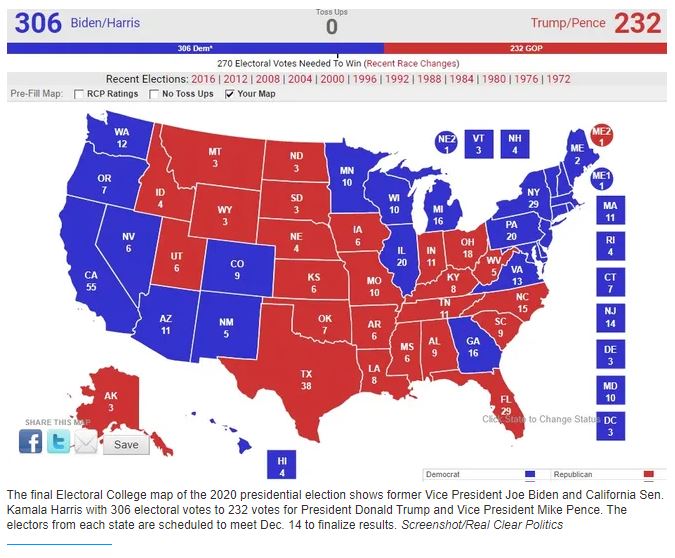
Like is or not the 2020 presidential election is not over. Electoral college votes on Jan 6, 2021. Biden 306 votes / Trump 232 votes. Votes necessary to win – 272. States with pending election challenges. Arizona – 12 votes. Georgia – 16 votes. Michigan – 15 votes. Total 43 votes.

On Feb 19, 2021, the United States Supreme Court had the opportunity to decide to hear four election lawsuits. They rejected all four ending that federal election challenges brought by Trump, Republican parties, and legislators.

On Mar 3, 2021, the United States Supreme Court heard oral arguments on an Arizona case about whether restrictions on such things as designated polling places and ID requirements were an equal protection violation.

About Mar 10, 2021, the United States Supreme Court refuses to hear Wisconsin election lawsuit on mail in ballots. The Court have no rationale for the decision.

About Mar 10, 2021, California mayor pleads guilty to election fraud and resigns as mayor pro temp.

Mar 15, 2021 – Michigan – Michigan state court judge “torched” secretary of state Jocelyn Benson for changing election rules without state legislative approval, mostly importantly changing the signature verification policy to one assuming that signatures were valid so long as there are any redeeming qualities in the application or return envelope. The news report says “of course, it’s too late now” but that it is a huge vindication for Donald Trump. Hmmm… We shall see.

Mar. 16, 2021 – Georgia – a Georgia state judge gave permission to independent election integrity plaintiff to be able to view about 150,000 Fulton County mail-in ballots to see if there are 30,000 counterfeit ballots as suspected. They believe that there will be ballots that are not folded, that are not filled in with a writing instrument, and only had presidential fill-ins. Flipping or tossing 30,000 ballots would change the presidential results and the senate results.

March 18, 2021 – Arizona – Maricopa will recount 2.1 million votes.

One person with courage makes a difference.

Waiting waiting more to come.

Silencing parents. AZ

March 19 2020

Shared from Facebook

Did Arizona Department of Child Safety try to bar parents from criticizing it?

DIANNA M. NÁÑEZ 2019.7.16

An Arizona Department of Child Safety report orders a parent to keep their court hearings and DCS meetings secret from news media, politicians and anyone who may bad-mouth the government.

In a document that otherwise seems standard for a report for a juvenile court judge, penned by a “DCS specialist” overseeing the case, this order stands out.

The DCS instructions for the parent are inserted in a section outlining services and support “to eliminate the need for continued out-of-home placement” for the child.

When a child becomes a ward of the state, the Department of Child Safety — with a judge’s approval — gets to recommend services that would aid in a family’s reunification. The parent doesn’t have to comply, but if the judge thinks the services are needed and a parent ignores the instructions, he or she could permanently lose custody of the child.

And at least one DCS report instructs clearly: The parent “must avoid inviting people to attend DCS meetings, or court hearings that may have a connection with the media, such as any journalist, newspaper/news reporters, potential political gain, or anyone who may write derogatory statements in social media or elsewhere regarding DCS or the Judicial system.”

The order is followed by allegations that the parent has repeatedly attempted “to invite these people to all” court hearings.

These hearings are public under state law.

The document criticizes the parent for continuing to need “supports” to help decrease “anxiety when faced with challenging questions or interactions with the Department.”

The Arizona Republic obtained a copy of documents that detail the state’s involvement in the case. According to the DCS document, the child was removed from home because the parent is struggling with mental health issues and unable to maintain a safe environment.

The document doesn’t say why DCS would insert language restricting a parent’s free speech rights into their case-plan services. Such services would typically include information about counseling, parenting education courses, housing or parenting skills.

The Republic has not independently verified the authenticity of the document, but it includes a court stamp with the names of state attorneys and a judge, as well as the signatures of Arizona DCS workers.

Asked by the Republic whether DCS places restrictions against parents inviting the media, politicians or anyone who may criticize the agency, a DCS spokeswoman said no, but cited the agency’s preference for privacy.

“We neither encourage or discourage parents regarding who they should or should not invite to court hearings,” said DCS spokeswoman Cynthia Weiss in a statement to The Republic. “Generally speaking our best outcomes occur when our involvement in a family’s life is kept private. Parents have a right to confidentiality in all family court proceedings.”

In response to follow-up questions about the language in documents obtained by The Republic, DCS spokesman Darren DaRonco said: “We can’t confirm the authenticity of a document that we haven’t seen.”

The Republic did not share the documents with DCS because the parent feared if their identity was revealed, they would be accused of violating confidentiality rules, which could harm their case.

The DCS ombudsman did not respond to The Republic’s emailed questions about whether language limiting who a parent can bring to court would overstep guidelines for case service plans, would violate a parent’s rights or what steps a parent could take to have such restrictions removed from a plan.

DCS officials often say confidentiality is in a child’s best interest and cite privacy restrictions as reasoning for not disclosing information about the government’s actions in a case.

While legislators and policymakers advocate for confidentiality to protect the identities of children and families, they’ve also pushed for greater transparency. In some cases, parents and officials push for accountability for the system that can take children from their families. In others, lawmakers and the public demand accountability for an agency that failed to remove children from homes where they later died.

Despite that push and pull, DCS orders that would ban a parent from informing people about their hearings or would stifle any criticism of DCS and the justice system are striking, even to those within the juvenile justice system.

“My gut reaction is that there’s a First Amendment problem there,” said Michael Nash, the once presiding judge of Los Angeles County’s juvenile courts, who now heads the region’s Office of Child Protection. “Generally speaking, our society theoretically values openness and I think that should apply in these hearings as well. Unfortunately, while confidentiality has some value, more often than not, it’s been used to protect the system rather than the parties.”

Parent and child-rights watchdog groups have increasingly raised questions about DCS’ attempts to control parents’ rights to invite anyone they want to their public hearings and speak publicly about their case. Those parents are entitled to open court hearings in cases that could determine how long their child must remain a ward of the state and, ultimately, whether the government may sever parental rights — arguably one of the most important rights any person holds.

But Director Greg McKay, who recently announced he would leave the post in September, has drawn fire as the head of an agency some see as more protective of its own actions than of parents’ and children’s rights.

DCS and the justice system largely wield the power in a child-welfare system meant to prevent neglect and abuse. But some parents say they feel they’re guilty until proven innocent and threatened that if they draw public attention to their case, it could cost them their kids.

“In too many states that’s exactly the problem, that everything is kept in the dark until a parent defies someone and risks losing their child permanently to make public information that was only written to protect bad actions by the state agency,” said Michael Ramey, executive director of the Parental Rights Foundation.

‘Getting to the truth’

Nationally, parental-rights and child-welfare advocates for greater transparency and accountability say there are still too many states with closed juvenile dependency courts, too many cases with gag orders and too little public scrutiny.

That may serve the state child-welfare agency or the government, but it harms parents who believe their or their children’s rights are being violated, Ramey said.

Sen. Heather Carter, R-Cave Creek, said she understands and is supportive of efforts to protect a family’s privacy, but lawmakers elected to represent the public should inquire about a case. It serves the agency and families, she said, when lawmakers can speak publicly about cases that present opportunities for legislative fixes or policies that would better serve child welfare.

“I think a fundamental role of government is protecting the most vulnerable so we’re constantly vigilant about that role responsibility,” she said.

Ramey pointed to a 2013 case that drew national attention when Connecticut parents fought the Massachusetts Department of Children and Families after their 15-year-old daughter, Justina Pelletier, was transferred to a Boston hospital, where her medical treatment was changed without their permission and DCF eventually gained custody of their child.

Against legal advice, the child’s father, Lou Pelletier, chose to violate a judge’s order and speak about the case. The father’s appeals were carried by news outlets across the nation. A judge later lifted the gag order and contempt of court orders against him.

The family has credited their comments to news media, in violation of the gag order, for drawing public scrutiny and spurring political pressure that changed the course of their case and eventually helped them regain custody of their daughter.

Ramey said that as a national organization, he receives numerous complaints from parents about child-welfare officials and courts trying to squelch their rights. Following the Pelletier case, more parents have balked at government restrictions and risked contempt charges to speak publicly about their case, he said.

But Ramey said he’s never seen anything as intrusive as an order that would mandate a parent keep secret their case from the news media, policymakers or anyone else who may make derogatory statements about DCS or the judicial system.

“It’s shocking and yet sadly, not surprising,” Ramey said. “Our confidentiality laws are in place to protect the children, but this kind of one-sided rule to keep parents from shining a light on the way they’re being treated does not serve children, it only serves to keep in darkness … that which needs to be fixed.”

He said such an order should spark concern in a state like Arizona, where the courts are open to the public.

“Courts that are charged with serving the best interest of the child should, of all people, be concerned with getting to the truth and not hiding it,” Ramey said. “Hiding the truth can only serve the agency that’s behaving in ways the legislators didn’t intend for it to behave, that’s behaving in ways the public would not accept, but it’s not going to protect the children.”

At DCS, a history of secrecy

Arizona’s child-welfare agency has historically been criticized for secrecy.

Long before McKay’s tenure, it took a string of child deaths and revelations of DCS’ (then known as Child Protective Services) missteps in the cases to trigger landmark legislative reforms in 2008 that permanently opened juvenile dependency hearings to public scrutiny and mandated checks on the system.

Gov. Doug Ducey appointed McKay director of DCS in 2015 after a tumultuous time, following Gov. Jan Brewer’s dismantling of the state’s Child Protective Services in 2014 amid promises to reform a broken system that had failed to protect children.

McKay had been leading the Office of Child Welfare Investigations when he exposed the agency hadn’t investigated more than 6,000 cases. Despite McKay’s whistle-blower reputation, critics balked at Ducey appointing a former police officer, who they said would prioritize enforcement, rather than a social worker or child-welfare expert, who would prioritize human services for reunifying families.

After McKay replaced Charles Flanagan, the fired former CPS head, McKay dismantled the Office of Special Investigations within the child-welfare agency, which provided some oversight of the agency through internal investigations of DCS staff.

At the time, McKay told the Phoenix New Times that OSI diverted resources needed to investigate cases of child abuse or neglect and that the closure had nothing to do with a misconduct investigation, which found no wrongdoing, into McKay’s former OCWI division. In response to a public-records request from the Republic, Ducey’s office claimed attorney-client privilege and refused to release investigation documents.

Under McKay, the number of children in foster care has declined. However, critics said their fears about a McKay administration were warranted when the new DCS head chose among his first major reformative acts to bring in-house an external public oversight system managed by Arizona State University’s School of Social Work. The move was questioned by lawmakers, child-welfare experts and DCS watchdog groups.

McKay told The Republic in a 2018 interview that he understood his critics’ concerns about his police background but that his work to reduce the number of children in foster care should speak to the priority he places on supporting families.

“People thought I was going to come in here and turn this organization into a police state — I was the person that kind of led to the dismantling of the old DCS as we knew it.” he said at the time. “I was coming from a law-enforcement and more of a prosecutorial background into a place where it is paramount that you have compassion, care and respect. Redemption is your goal.”

Chandler family’s case becomes flash-point for public scrutiny

DCS officials have increasingly refused to answer questions about numerous cases and actions, including whether or how the agency:

• properly vetted foster parents after a father was arrested for suspected abuse of his adopted foster child,

• is decreasing the number of children in foster care

• followed its own policies when a caseworker and police with guns drawn raided a Chandler couple’s home and removed their three children.

Media coverage of the Chandler case has stirred concern nationwide about public access to court hearings, as well as from parent and child-rights advocates who worry child-welfare agencies prefer to manage cases without being second-guessed and that it’s easier to remove a child from their parent when no one is watching.

In that case, the parents wanted their court proceedings to remain open, but a judge later barred a reporter and a lawmaker from a hearing, then told attendees at another hearing not to publish anything about the case. In response to legal motions by The Republic, the judge later ordered recordings of those hearings released, but ruled that the lawmaker and reporter had violated confidentiality in earlier hearings — a ruling Townsend disputed.

‘I have no confidence in DCS’: State legislator questions DCS, judicial system after privacy ruling

Parents who have concerns about how DCS is handling their case or treating their family have increasingly turned to social media to attract attention to their case. They hope their appeals for accountability will draw public support, political pressure and media coverage that may force the government to manage their case more carefully and help them get their kids back.

Some attorneys worry that the public complaints about DCS may spur retribution. Nicholas Boca, a family law attorney representing the Chandler mother, told The Republic in April that criminal charges and an edited video of the raid released by police were payback for the parents publicly criticizing police, DCS and the entire Arizona child-welfare system.

The Maricopa County Attorney’s Office told the Republic in May that despite the Chandler Police Department recommending charges against the parents, officials declined to prosecute the parents based on “no reasonable likelihood of conviction.”

The father told the Republic he’d hoped drawing attention to the case would protect his children, but he stopped granting interviews, saying he feared continuing to speak out could cost him his children.

Is legislative action needed?

Lawmakers say they regularly hear from constituents seeking help with their DCS case.

Sen. Carter said she receives desperate pleas from parents and grandparents. However, she said she’d never heard of any DCS restrictions that would ban a mother or father from informing the public, politicians, or anyone who may criticize the child-welfare system, about their DCS meetings or hearings.

“Let’s say we wanted to answer that question,” Carter said, referring to quizzing DCS about a ban in a parent’s case. “I can only have a one-way communication and say I’m concerned about this case.”

DCS officials say that they will only provide information to lawmakers about a case if they first sign a confidentiality agreement. Carter says that’s a Catch-22.

“Once I have a confidentiality agreement in place I can never report back to my constituent or fellow lawmakers what I found out,” she said.

Carter said DCS officials are typically responsive to her requests and to requests from the Legislature for policy information. But more needs to be done, she said.

“Is there some sort of statutory path that we can build to allow us to gather general information not case specific that would allow us to make policy decisions?” she said.

“It doesn’t matter whether you’re an elected official, a parent, a member of the community, we all have this fundamental moral calling to protect kids and so we want to make sure that we’re doing everything we can,” she said.

The good, the bad and the ugly

Nash, the former presiding judge of Los Angeles County’s juvenile courts who now heads the region’s Office of Child Protection, was among a group of stakeholders who pushed for greater transparency and tried to open California child-welfare hearings.

Doing so would have placed the state among 22 that mandate hearings be open to the public.

Although California state law says there’s a presumption that juvenile dependency hearings are closed, the court could allow the public into a hearing if there’s a legitimate public interest in attending. So, as presiding judge, Nash spearheaded an effort to articulate the process for someone to have access to the court under California law.

“What happens in a lot of places is the judge automatically says, ‘No, you can’t come in,’ when they really have to make that decision on a case-by-case basis,” he said.

But without regular oversight, historically veiled systems can slowly revert toward secrecy.

“It’s free speech,’ he said. “It’s your life, your case, your children, you should be able to talk about it.”

Nash said the entire child-welfare system is at stake if secrecy, and overly broad confidentiality restrictions, stymie transparency.

“The system is very imperfect, while the system is designed to do good things for any number of reasons it is never implemented as good as we like it,” Nash said. “It’s more important that the public understands the system, understands the good, the bad, the ugly, so the public and legislators can figure out what it’s going to take to fix it.”

About this report

A three-year grant from the Arizona Community Foundation makes reporting on child-welfare issues possible. See other “faces of child welfare” in our series at azcentral.com/child-welfare and support ongoing coverage.

Are you part of the child-welfare system? We want to understand your story. Share it with us at static.azcentral.com/child-safety-form/.

Reach the reporter at dianna.nanez@arizonarepublic.com

2021 Tennessee proposed legislation – child welfare and families

Published by Connie Reguli for

Family Forward Project and Family Forward Foundation.

See the video description here.

Waiting on Family advocacy bill.

Bills pending as of 2/12/2021 👇

Our Youth’s View on American Prosperity

February 12, 2021 – The below post was shared through social media and it is so true.

However, before reading the opinion of this wise 26 year old, let me flash back to my twenties and tell you what I saw in America. I was eight years old with President Kennedy was elected. Honestly, I was a child in Indiana which was historically conservative so Kennedy’s presidency was not our preference. But even at the young age, I remember the impact of world events at that time. I remember warnings of communism and bombings. We had bomb raids drills in our class that we had to crawl under our small desks (like that would stop a bomb). It was well known that Cuba had missiles pointed at our country. We also were families of a new prosperity. Washing machines, black and white TVs, telephones with party-lines, and two-door cars. We still hung our clothes on the line outside. We played in the dirt in the backyard. We only had cartoons on Saturday morning. We had four channels on television. And a Sears Roebuck catalog was the closest thing we got to long-distance shopping. I miss the 1950’s. By the 1960’s, riots started in the south and on college campuses. The Kent State riot occurred the year I was slated to go away to college and being from a small town in Indiana, I struggled with trepidation about being away from home. No doubt we are in a different world and I was so excited to see the post by Alyssa……….enjoy and share.

What a great perspective and well worth the read …..This article was written by a 26 yr old college student by the name of Alyssa, who’s in grad school for her MBA. “My Generation Is Blind to the Prosperity Around Us! I’m sitting in a small coffee shop near Nokomis (Florida) trying to think of what to write about. I scroll through my newsfeed on my phone looking at the latest headlines of presidential candidates calling for policies to “fix” the so-called injustices of capitalism. I put my phone down and continue to look around. I see people talking freely, working on their MacBook’s and ordering food they get in an instant, seeing cars go by outside, and it dawned on me; we live in the most privileged time in the most prosperous Nation and we’ve become completely blind to it. Vehicles, food, technology, freedom to associate with whom we choose. These things are so ingrained in our American way of life we don’t give them a second thought. We are so well off here in the United States that our poverty line begins 31 times above the global average. Thirty One Times!!!Virtually no one in the United States is considered poor by global standards. Yet, in a time where we can order a product off Amazon with one click and have it at our doorstep the next day, we are unappreciative, unsatisfied, and ungrateful? Our unappreciation is evident as the popularity of Socialist policies among my generation continues to grow. Congresswoman Alexandria Ocasio-Cortez recently said to Newsweek talking about the millennial generation, “An entire generation which is now becoming one of the largest electorates in America came of age and never saw American prosperity.” Never saw American prosperity?? Let that sink in. When I first read that statement, I thought to myself, that was quite literally the most entitled and factually illiterate thing I’ve ever heard in my 26 years on this earth. Many young people agree with her, which is entirely misguided. My generation is being indoctrinated by a mainstream narrative to actually believe we have never seen prosperity. I know this first hand, I went to college, let’s just say I didn’t have the popular opinion, but I disagree. Why then, with all of the overwhelming evidence around us, evidence that I can even see sitting at a coffee shop, do we not view this as prosperity? We have people who are dying to get into our country! People around the world destitute and truly impoverished. Yet, we have a young generation convinced they’ve never seen prosperity and, as a result, we elect some politicians who are dead set on taking steps towards abolishing Capitalism!!Why? The answer is this, my generation has only seen prosperity. We have no contrast! We didn’t live in the great depression or live through two World Wars, the Korean War, The Vietnam War and we didn’t see the rise and fall of Socialism and Communism. We don’t know what it’s like to live without the internet, without cars, without smartphones. We don’t have a prosperity problem. We have an entitlement problem, an ungratefulness problem, and it’s spreading like a plague.”

THANK YOU ALYSSA!